
YCA1030 Dusk to Dawn Sensor
4.4Editor score
Hard-wired post eye design
Automatic light control
Weatherproof IP65 rating
Explore our expert comparison of the top light sensor for home security devices available today to enhance your smart home automation and protect your property
Securing your home starts with detecting motion and light accurately. The best light sensor for home security devices combine sensitivity with smart automation to keep your property safe without wasting energy on unnecessary lighting or alerts.
We compared ten top-rated products focusing on range, connectivity, battery life, and ease of installation. This list covers everything from budget-friendly photocells to advanced mmWave sensors that integrate seamlessly with popular smart home hubs.
Each pick highlights key features pros trade-offs to help you choose the right solution for your needs. Keep in mind that product availability and pricing may change so always verify details before purchasing your new security gear.
4.4Editor score

4.4Editor score

4.4Editor score
This side-by-side comparison highlights the core specifications and capabilities of each selected light sensor for home security to help you make an informed decision based on your specific security and automation needs.


The Akamatis Litos v3 stands out as a top choice for advanced users seeking precise human presence detection. With a 4.4 star rating from verified buyers, this device combines mmWave radar with an integrated light sensor to trigger automations based on both occupancy and ambient light levels.
We may earn a commission when you buy through this link, at no additional cost to you.
Its HLK-LD2401 mmWave radar can detect stationary objects up to 20 feet indoors, solving the common issue where traditional PIR sensors miss users who are sitting still. The integrated VEML7700 light sensor ensures that automations only trigger when the room is dark, saving energy and improving efficiency.
While the device is powerful, it is designed exclusively for Home Assistant users, which may limit adoption for those relying on Alexa or Google Home ecosystems. Additionally, the need for an existing Home Assistant installation means this is not a plug-and-play solution for beginners.
If you are invested in the Home Assistant ecosystem and want the most accurate presence detection available in a Wi-Fi form factor, the Litos v3 is an excellent investment. Its ability to distinguish between true presence and mere motion makes it ideal for complex security scenarios.
Unlike standard PIR sensors, the mmWave radar detects stationary individuals, ensuring lights or alarms remain active even when no movement occurs.
The built-in light sensor provides accurate ambient light readings, allowing for smarter automations that depend on both presence and darkness.
We may earn a commission when you buy through this link, at no additional cost to you.
For those seeking a no-nonsense way to automate outdoor lighting without spending a fortune, the YCA1030 is an ideal solution. With a solid 4.4 star rating, this photocell sensor ensures lights turn on at dusk and off at dawn reliably, providing consistent security illumination every night.
We may earn a commission when you buy through this link, at no additional cost to you.
The sensor is UL listed and IP65 weatherproof, making it suitable for harsh outdoor conditions. It fits standard outlet boxes and works with a wide range of light sources including LED, incandescent, and fluorescent bulbs. This versatility allows it to integrate into existing setups without needing new wiring or fixtures.
The main limitation is the lack of smart connectivity; you cannot control it remotely or set specific schedules beyond day and night cycles. Additionally, it requires hard-wiring which may necessitate professional help if you are not comfortable working with electrical circuits.
If your primary goal is cost-effective security lighting that operates independently of your smart home network, the YCA1030 delivers exceptional value. It is a straightforward, reliable choice for driveways, porches, and walkways.
The direct electrical connection ensures consistent operation without the risk of battery depletion or wireless interference affecting performance.
Compatible with tungsten, fluorescent, and LED bulbs, this sensor adapts to almost any existing outdoor lighting fixture you might own.
We may earn a commission when you buy through this link, at no additional cost to you.
The Philips Hue Outdoor Motion Sensor offers a premium experience for users already invested in the Hue ecosystem. With a 4.4 star rating, this sensor provides seamless integration with smart lighting to automate illumination based on motion and ambient light conditions effectively.
We may earn a commission when you buy through this link, at no additional cost to you.
Its 160-degree detection area covers large outdoor spaces like patios and driveways effortlessly. The sensor supports automatic dusk to dawn modes, ensuring lights only activate when needed to save energy while maintaining safety. It is IP44 rated for weather resistance, making it suitable for outdoor installation.
However, the need for a Hue Bridge is a significant consideration as it adds to the initial cost. Furthermore, the price is higher compared to standalone motion sensors that do not require a hub, making it a premium choice for those committed to the system.
If you want a cohesive smart home setup where security and lighting work in harmony, this sensor is a top-tier option. Its reliability and ease of use make it worth the investment for existing Hue users looking to upgrade their outdoor security.
Works with Alexa, Google Assistant, and Apple HomeKit to provide flexible control and voice command support across all devices.
Automatically manages light timing to ensure security is maintained at night while minimizing energy waste during daylight hours.
We may earn a commission when you buy through this link, at no additional cost to you.
This Zigbee motion sensor is designed for users who value flexibility and energy efficiency in their home automation setup. With a 4.4 star rating, it combines a PIR detector with an ambient light sensor to create smarter lighting routines that save power and enhance security.
We may earn a commission when you buy through this link, at no additional cost to you.
The 360-degree adjustable mount allows precise aiming to avoid false triggers from pets or moving curtains. It offers a detection range of up to 26 feet and supports multiple sensitivity levels, making it versatile for various indoor and outdoor environments.
A key requirement is a Zigbee hub, meaning it does not connect directly to Wi-Fi. This adds a step to setup but ensures low power consumption and reliable connectivity within a mesh network. Battery alerts help prevent unexpected shutdowns.
Ideal for Home Assistant and SmartThings users, this sensor balances performance and cost. It is a reliable choice for those who already have a Zigbee ecosystem and need precise control over light and motion interactions.
Uses Zigbee 3.0 to ensure long battery life and stable connection within a secure smart home network.
The ball-joint base allows you to aim the sensor in any direction for optimal coverage in tight or angled spaces.
We may earn a commission when you buy through this link, at no additional cost to you.
The TP-Link Tapo Motion Sensor is a robust option for users seeking extended battery life and reliable wireless communication. With a 4.5 star rating, it offers a wide detection range and supports Smart Actions to automate other Tapo devices without relying on the cloud.
We may earn a commission when you buy through this link, at no additional cost to you.
Its Sub-1G Low-Power Wireless protocol provides better range and stability than standard Wi-Fi. The sensor can last up to two years on a single battery, ensuring minimal maintenance. Adjustable sensitivity settings help reduce false alarms caused by environmental factors.
While it is an excellent device, it requires the Tapo Hub to function fully. This dependency limits its utility if you are not already using the Tapo ecosystem for other smart home products. However, for Tapo users, it offers great value.
If you want a reliable sensor that operates efficiently for years with minimal intervention, the T100 is a strong candidate. Its local automation capabilities make it a secure and efficient choice for your home security setup.
Operates for up to two years on a single CR2450 battery, reducing the need for frequent replacements.
Allows device-to-device automation that continues to work even if your internet connection goes down.
We may earn a commission when you buy through this link, at no additional cost to you.
This contact sensor is designed to secure entry points with precision and style. With a 4.6 star rating, it integrates seamlessly with the Hue Bridge to provide real-time alerts when doors or windows are opened while you are away.
We may earn a commission when you buy through this link, at no additional cost to you.
The sensor can trigger lights to turn on or send alerts to your mobile device instantly. It also tracks activity logs to show when and if a sensor was triggered or tampered with, offering peace of mind and accountability.
Its adhesive backing makes installation easy without tools, but it requires the Hue Bridge to function. This means it is most effective for those who already own a Hue Bridge and want to extend their security setup easily.
For indoor security, this sensor is a sleek and reliable option. It works best as part of a broader security system where door and window monitoring is essential.
Instantly notifies your mobile device when a door or window is opened, ensuring you are always aware of entry activity.
Supports automations that turn lights on and off to mimic presence when you are away for added security.
We may earn a commission when you buy through this link, at no additional cost to you.
This two-pack of photocell sensors offers a cost-effective solution for automating multiple outdoor lights simultaneously. With a 4.5 star rating, these switches turn lights on at dusk and off at dawn without manual intervention, ideal for large properties.
We may earn a commission when you buy through this link, at no additional cost to you.
They operate across a wide voltage range from 120V to 277V, compatible with most bulb types. The IP65 water-resistant rating ensures durability in rain and snow, while the swivel mount allows precise positioning for accurate light detection.
As hard-wired devices, they lack smart connectivity or remote control capabilities. Installation requires disconnecting power and wiring the switch, which may be challenging for inexperienced users.
If you need to automate multiple fixtures without breaking the bank, this 2-pack provides exceptional value. It is a practical choice for driveways, garages, and outdoor corridors that need consistent night lighting.
Supports various input voltages including 120V and 277V making it suitable for residential and commercial applications alike.
The swivel feature allows you to adjust the angle for optimal light detection and accurate performance in varying environments.
We may earn a commission when you buy through this link, at no additional cost to you.
The Ring Motion Detector offers straightforward security for homes using the Ring ecosystem. With a 4.6 star rating, it sends instant intruder alerts and features a pet-friendly mode to reduce false alarms from small pets.
We may earn a commission when you buy through this link, at no additional cost to you.
It does not require a base station as it connects over Amazon Sidewalk. This makes setup incredibly easy and allows the sensor to extend coverage throughout your home and beyond. The 90-degree field of view covers most rooms effectively.
While easy to use, it relies on Amazon Sidewalk which may raise privacy concerns for some users. Additionally, the indoor range is limited compared to more advanced sensors.
For Ring users wanting an easy addition to their security setup, this sensor is a reliable choice. It is best used in rooms where pets are present but you still need consistent detection.
Connects directly via Amazon Sidewalk eliminating the need for a central hub or base station.
Customize settings to reduce false alerts from pets under 50 lbs ensuring accurate detection without nuisance alarms.
We may earn a commission when you buy through this link, at no additional cost to you.
The YoLink Indoor Motion Sensor is engineered for properties requiring extreme range. With a 4.5 star rating, it uses LoRa wireless technology to reach up to 2,034 feet ensuring coverage across multiple floors or buildings.
We may earn a commission when you buy through this link, at no additional cost to you.
It allows device-to-device pairing so sensors can trigger sirens or switches even if the internet is down. This redundancy ensures your security system remains functional during outages. The plug-and-play setup makes it easy to add devices.
However, it requires a YoLink Hub which limits integration with other smart home systems. If you rely heavily on Alexa or Google Home this may be a drawback.
For large properties or businesses needing reliable long-range detection, this sensor is unmatched. It is best suited for users who prioritize range and offline functionality over smart home integration.
Uses LoRa technology to provide superior range and penetration compared to traditional WiFi or RF systems.
Create links between devices that operate even when power and internet are down for uninterrupted security.
We may earn a commission when you buy through this link, at no additional cost to you.
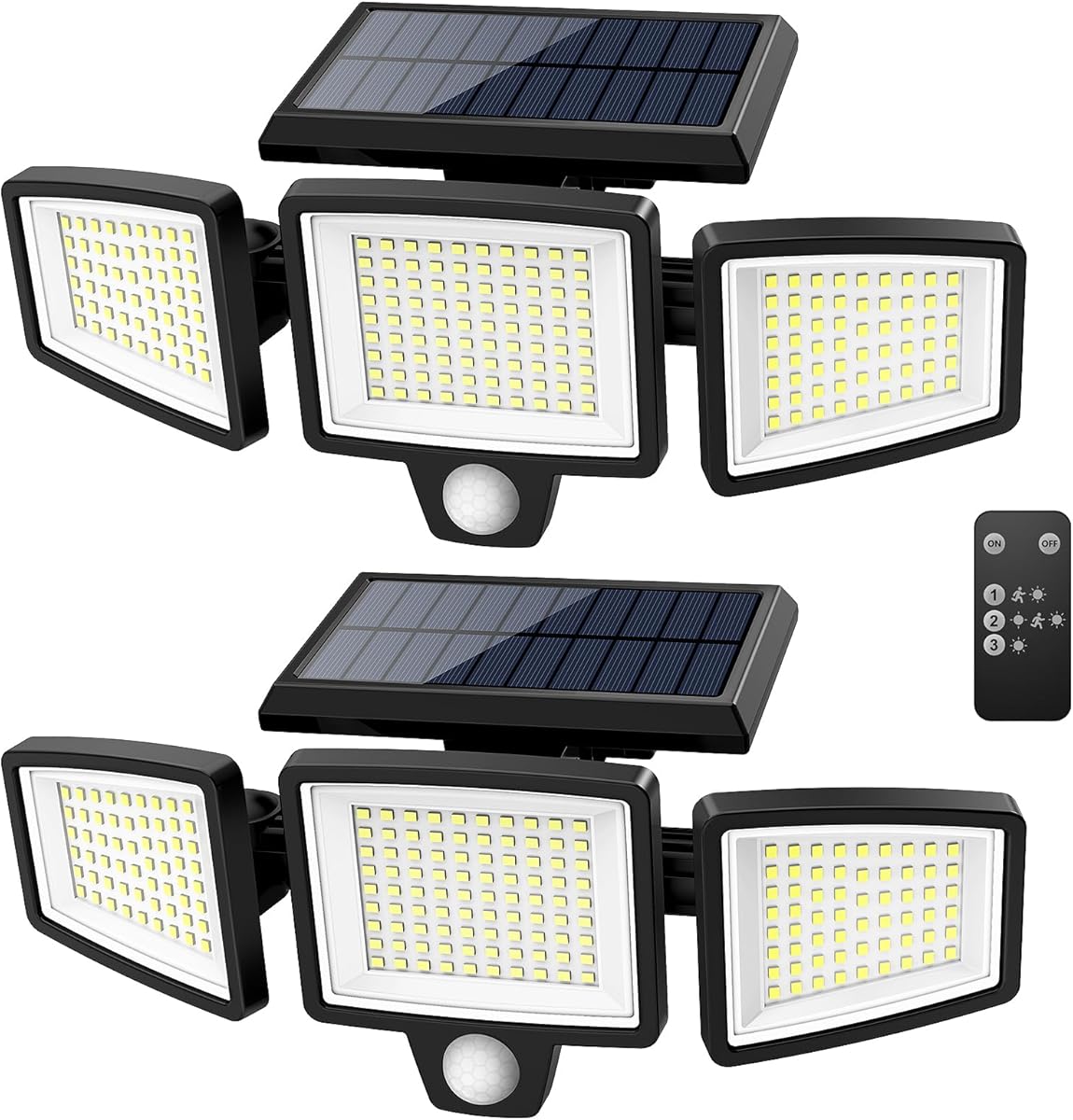
The Tuffenough Solar Outdoor Lights provide a complete lighting and motion detection solution. With a 4.4 star rating, these lights combine 210 LEDs with a PIR motion sensor to illuminate large areas without requiring electrical wiring.
We may earn a commission when you buy through this link, at no additional cost to you.
They offer three lighting modes including a dim light mode and strong light mode controlled by a remote. The IP65 waterproof rating ensures performance in heavy rain and snowstorms making them reliable for any outdoor setting.
Performance depends on direct sunlight for charging, so placement is critical. In cloudy regions or shaded areas the battery may not charge fully affecting night-time operation.
If you want a cost-effective, wire-free security light for driveways or backyards this is a practical choice. It is best suited for locations with ample daily sunlight and minimal shade.
Built-in solar panel charges the battery automatically reducing the need for external power sources and wiring.
Select from strong light, dim light, or strong long light modes to match your specific security and energy needs.
We may earn a commission when you buy through this link, at no additional cost to you.
Selecting the right light sensor requires balancing automation needs with security requirements. Below are key factors to consider before purchasing.
Decide if you want a hub-based sensor like Zigbee or Tapo or a direct Wi-Fi connection. Hub-based systems offer better battery life and reliability but require initial setup. Direct Wi-Fi is easier to integrate with voice assistants but may drain battery faster.
Ensure your existing smart home ecosystem supports the protocol to avoid compatibility issues.
PIR sensors detect heat changes but may miss stationary humans. mmWave radar detects presence and motion even when a person is still. Choose mmWave if you need true presence detection for lights or alarms.
PIR is usually more affordable while mmWave provides advanced capabilities for modern smart homes.
If you want lights to turn on only when it is dark, choose a sensor with an integrated ambient light sensor. This prevents false triggers during the day and saves energy.
Check the lux range of the sensor to ensure it matches your indoor or outdoor conditions accurately.
Battery-powered sensors offer flexible placement but require periodic replacement. Hard-wired sensors like photocells never need battery changes but require electrical wiring.
Look for low-power protocols like Zigbee or LoRa to extend battery life for battery-operated units.
Ensure the sensor covers your intended area. A 90-degree view works for small rooms while 160 degrees is better for large open spaces.
Consider the detection range in feet to avoid blind spots in entryways or driveways.
Outdoor sensors must have an IP rating such as IP65 to protect against rain and dust. Indoor sensors generally require lower ratings but should still be durable.
Choose sensors with weatherproofing if placing them on porches or exterior walls.
Plug-and-play sensors are ideal for those with limited technical skills. Hard-wired or Hub-based sensors may require more setup and tools.
Check if adhesive or magnetic mounts are included for quick installation without drilling.
Confirm the sensor supports your preferred smart home platforms like Home Assistant Alexa or Google Home. Some devices work exclusively with one ecosystem.
Integration ensures you can automate lights and alarms effectively without extra apps.
Proper placement is essential for reliable performance. Mount sensors at a height of 6 to 8 feet to optimize coverage while avoiding false triggers from moving objects like curtains.
For wireless sensors, monitor battery levels regularly via the app to ensure they remain functional. Replace batteries promptly when alerts are received to avoid gaps in security coverage.
Keep the sensor lens clean and free of dust or debris. Periodically wipe the exterior with a soft cloth to maintain accurate light and motion detection.
If you want to avoid a hub, Wi-Fi sensors like the Akamatis Litos v3 are excellent options. They connect directly to your home network and support Home Assistant for local automation. However, they may require more setup than simple Wi-Fi devices.
Solar-powered sensors depend on sunlight to charge and may perform poorly on extended cloudy days. For consistent operation, choose hard-wired photocells or battery-powered sensors that do not rely on solar charging.
mmWave radar detects stationary objects and is more accurate for presence detection while PIR only detects movement. mmWave is ideal for smart lighting and security scenarios where a person might remain still for long periods.
Yes, sensors with integrated light sensors allow you to set automation rules based on both motion and ambient light levels. This ensures lights activate only when needed saving energy during the day.
Basic motion detection and alerts work without a subscription but advanced features like video recording or 24/7 monitoring require a Ring Protect plan. Check the specific features you need before purchasing.
Most wireless sensors use adhesive or magnetic mounts for tool-free installation. Hard-wired sensors may require electrical work so consult an electrician if you are not comfortable handling wiring.
Yes, most motion and light sensors are designed for indoor use. Ensure the product is rated for indoor conditions to avoid moisture damage if placed in bathrooms or kitchens.
Battery life varies by model and usage but many sensors last 1 to 2 years on a single charge. Check the product specs for expected battery life based on daily detection frequency.
The Akamatis Litos v3 and YCA1030 stand out as top picks for advanced automation and budget-friendly solutions respectively. These devices offer reliable performance and unique features tailored to different user needs.
When selecting a light sensor prioritize connectivity and placement to ensure consistent detection. Consider your existing smart home ecosystem to maximize automation and security efficiency.
Prices and availability change frequently so verify the latest details before buying. Regularly update your firmware and check batteries to keep your security system running smoothly year round.