
SHILLEHTEK Universal Power Supply Module
4.6Editor score
Universal MB102 compatibility
Flexible DC or USB input
Compact solderless design
This expert guide compares the top 12V breadboard power supply options for makers and engineers based on voltage output, safety features, and reliability.
Finding the right power source for your electronics projects can be challenging. A reliable 12V breadboard power supply ensures stable voltage for Arduino, Raspberry Pi, and sensor circuits without risking damage.
We compared ten popular modules focusing on input flexibility, output regulation, and build quality. Each product offers unique features like dual channels, USB compatibility, and protection circuits for safe prototyping.
Every pick below highlights key strengths and ideal use cases to help you decide. Prices and availability may change, so check current listings before purchasing to ensure you get the best value today.
4.6Editor score

4.5Editor score

4.8Editor score
The following table provides a side-by-side comparison of all ten products to help you quickly identify key specifications and features for your prototyping needs.




This dual-pack module stands out with its versatile input options including modern Type-C and classic DC jacks. It earns top marks for allowing independent voltage control on both rails.
We may earn a commission when you buy through this link, at no additional cost to you.
The independent switches let you power one side at 3.3V and the other at 5V simultaneously. This flexibility is essential for mixed-voltage circuits like Arduino projects.
Safety features include onboard short-circuit protection that limits current if wiring mistakes occur. The concave design ensures it sits flush without wasting breadboard tie points.
Hobbyists needing a reliable supply for multiple projects will appreciate the 2-pack value. It is the ideal choice for classrooms or studios needing consistent power.
Supports both Type-C and DC inputs so you can use phone chargers or wall adapters conveniently.
Separate switches and toggles let you run different voltages on left and right rails without interference.
We may earn a commission when you buy through this link, at no additional cost to you.
This pack offers five modules plus 9V connectors for versatile power sources. It is designed to fit standard 400 and 830 point breadboards easily.
We may earn a commission when you buy through this link, at no additional cost to you.
The voltage selection is straightforward with jumper settings for 3.3V or 5V output. It works well for small sensors and logic circuits.
Input options include DC or USB making it portable for field testing. However current capacity is limited to under 700mA per module.
Ideal for classrooms needing multiple units without breaking the budget. The included connectors save time when testing battery-powered ideas.
Includes 9V connectors so you can quickly switch to battery power for portable prototype testing.
Designed for 400 and 830 point boards ensuring stable connection without sliding during use.
We may earn a commission when you buy through this link, at no additional cost to you.
This kit is perfect for beginners needing everything in one box. It includes an 830 point breadboard and a dedicated 12V 1A power adapter.
We may earn a commission when you buy through this link, at no additional cost to you.
The power module supports standard 3.3V and 5V outputs for most microcontrollers. Jumper wires are included for immediate prototyping without extra purchases.
Stability is ensured with a dedicated adapter instead of relying on USB power. This is great for projects requiring consistent current draw.
Educators and students will find this bundle convenient for classroom labs. It removes the hassle of sourcing individual components separately.
Combines breadboard power supply and jumper wires so you can start building immediately without hunting for parts.
Includes a dedicated 12V adapter ensuring reliable voltage even when USB ports fluctuate.
We may earn a commission when you buy through this link, at no additional cost to you.
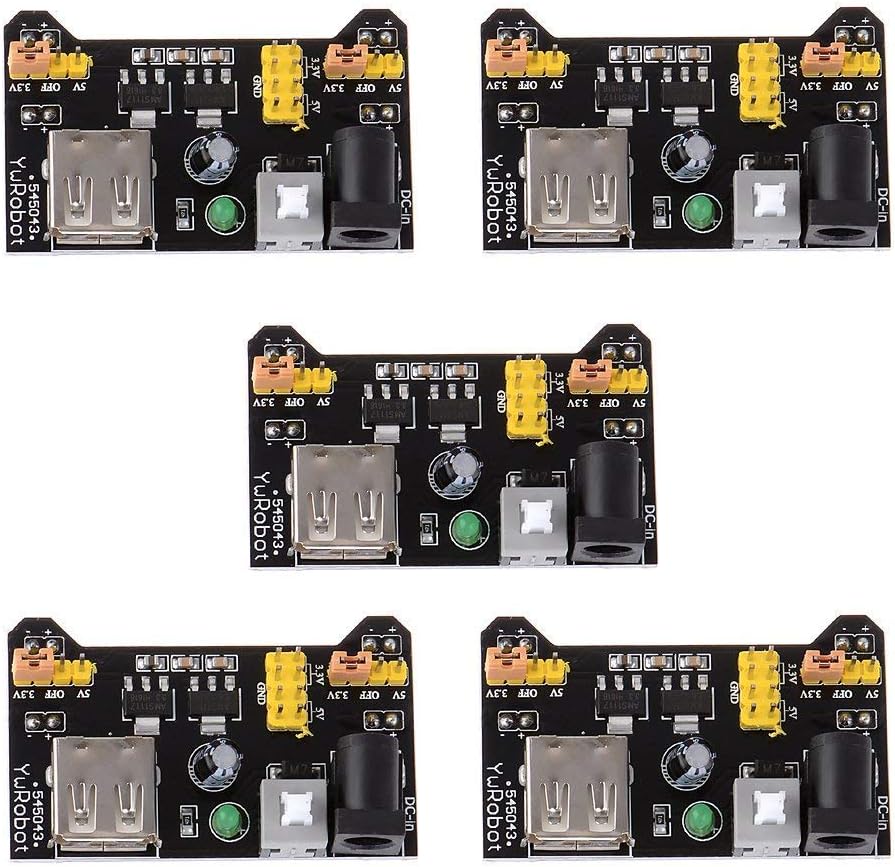
HiLetgo is a known name in hobbyist electronics and these modules reflect that reliability. You get five units in the pack for backup or multiple projects.
We may earn a commission when you buy through this link, at no additional cost to you.
They support standard 3.3V and 5V outputs compatible with most common microcontrollers. Input flexibility allows USB or DC power depending on your setup.
The modules are compact and plug directly into MB102 boards without adapters. This saves space and keeps wiring organized on your workbench.
Great for labs needing multiple identical power sources for different teams. It is a solid choice for general prototyping tasks.
Plugs directly into MB102 rails saving time on wiring and reducing clutter on the breadboard.
Accepts both USB and DC inputs so you can use laptops or wall adapters easily.
We may earn a commission when you buy through this link, at no additional cost to you.
This module offers excellent value for money with a high customer rating. It is designed specifically for seamless integration with MB102 boards and common boards.
We may earn a commission when you buy through this link, at no additional cost to you.
Dual voltage output supports 3.3V and 5V making it versatile for mixed projects. The input range supports DC or USB giving you flexibility in power sources.
Built with quality components it ensures stable power distribution for sensitive sensors. The compact size keeps your workspace organized during testing.
Budget-conscious makers will find this a perfect addition to their toolkit. It balances cost and performance better than many competitors.
Delivers high ratings at a low price making it accessible for students and hobbyists on tight budgets.
Works with Arduino and ESP32 boards ensuring broad support for popular microcontrollers.
We may earn a commission when you buy through this link, at no additional cost to you.
This pack provides five modules plus battery connectors for flexible power options. It is designed for 400 and 830 point breadboards for universal fit.
We may earn a commission when you buy through this link, at no additional cost to you.
Voltage selection uses a yellow jumper allowing easy switching between 3.3V and 5V. An LED indicator shows power status clearly during operation.
The self-locking switch ensures easy control without accidental toggling. It is suitable for learning purposes and general circuit experiments.
Teams needing multiple power sources can benefit from this quantity. It simplifies logistics for shared workspaces or workshops.
Green LEDs confirm power status so you know immediately if the rails are active.
Includes 9V connectors enabling quick power swaps without permanent wiring changes.
We may earn a commission when you buy through this link, at no additional cost to you.
This kit offers an advanced solution with adjustable outputs and a digital display. It integrates multiple voltage options into one board for efficient prototyping.
We may earn a commission when you buy through this link, at no additional cost to you.
The built-in display lets you confirm voltage levels before connecting circuits. This reduces trial and error during setup and increases confidence.
Designed for labs it supports analog circuits and advanced electronics. You can fine-tune outputs to match exact component requirements.
Experienced users will enjoy the flexibility to solder their own unit. It is ideal for advanced DIY projects needing custom power.
Digital display shows real-time voltage so you can verify settings instantly.
Multiple outputs on one board reduce wiring errors and save space on the workbench.
We may earn a commission when you buy through this link, at no additional cost to you.
SunFounder provides a robust module designed for boards like ESP32 and Raspberry Pi. It delivers higher currents such as 1.5A at 5V compared to standard modules.
We may earn a commission when you buy through this link, at no additional cost to you.
Two independent channels plus a USB output offer versatile connection options. You can power multiple devices or sensors without extra converters.
The compact size ensures it fits easily on smaller breadboards. It includes a simple on/off switch for easy control.
Great for projects needing stable high current for motors or displays. It is recommended for serious makers and educators.
Supports up to 1.5A at 5V ideal for boards like Pi Pico or ESP32 that need more power.
Independent channels and USB output allow powering multiple devices simultaneously without adapters.
We may earn a commission when you buy through this link, at no additional cost to you.
This premium module stands out with its wide input range and adjustable outputs. It is designed for advanced prototyping needing exact voltage settings.
We may earn a commission when you buy through this link, at no additional cost to you.
It supports inputs up to 40V and provides multiple fixed or adjustable outputs. This flexibility makes it suitable for diverse and complex projects.
Switching technology ensures efficient power conversion with minimal heat. The adjustable option allows fine-tuning for sensitive analog circuits.
Professionals requiring precise power distribution will find this essential. It is the top choice for advanced labs and workshops.
ADJ output allows custom voltage settings ensuring compatibility with non-standard components.
Supports input up to 40V making it versatile for different power sources and battery packs.
We may earn a commission when you buy through this link, at no additional cost to you.
This adapter provides full bench power with adjustable voltage from 3V to 24V. It includes multiple tips and alligator clips for connecting to breadboards directly.
We may earn a commission when you buy through this link, at no additional cost to you.
Safety features include overcurrent and overtemperature protection to prevent hazards. The LCD display shows real-time voltage output for accurate control.
It supports high power needs up to 72W which is useful for motors and LED strips. It replaces multiple fixed adapters with one universal unit.
Engineers needing a versatile main power source should consider this. It complements breadboard modules well for complex projects.
Built-in protections like over-voltage and short-circuit prevent damage to devices during experiments.
Includes alligator clips and tips to connect easily to bare wires or specific device jacks.
We may earn a commission when you buy through this link, at no additional cost to you.
Selecting the right power supply requires understanding your voltage current and portability needs. Use these factors to narrow down the options that fit your specific projects.
The input voltage range determines how you power the module. Look for inputs supporting 6V to 12V DC or USB Type-C so you can use common chargers or batteries. Some modules offer both DC jacks and USB for maximum flexibility in the lab.
Prioritize modules that match your existing power sources to avoid buying extra adapters. If you work in different locations choose options with portable USB input options.
Most projects need 3.3V or 5V outputs for microcontrollers. Ensure the module supports these voltages either via switches or jumpers. Some advanced models offer adjustable outputs for custom requirements.
Choose a module with easily selectable options to save time during wiring. Independent channel control is a plus for complex circuits needing two voltages.
Current capacity dictates how many components you can power simultaneously. Standard modules often limit output to 700mA or 1A. High current options support motors or displays without voltage drops.
Check your total current draw before selecting. If your circuit requires more than 1A choose a module rated for at least 1.5A or higher to ensure stability.
Short circuit and overcurrent protection are vital to protect expensive components. Modules with built-in protection limit current during wiring mistakes. Look for indicators like LEDs that show power status.
Always verify if the module includes safety limits. This is especially important when working with students or beginners who might make connection errors.
The module must plug securely into your breadboard without using tie points. Concave designs or flush mounting ensure it sits flat. Check dimensions against your board size for compatibility.
Avoid bulky designs that block connection rows. Compact modules leave more room for components and keep the workspace organized during testing.
Buying a pack of multiple units is cost-effective for classrooms or teams. Check if the package includes accessories like connectors or jumpers. A complete kit saves time sourcing extra parts.
Consider how many projects you plan to run at once. If you need backups or multiple stations a multi-pack ensures consistent power across all setups.
Established brands often offer better build quality and reliability. Reviews and ratings provide insight into durability and customer support. Trusted names reduce the risk of receiving defective units.
Research user feedback on stability and longevity. High ratings for long-term use indicate a reliable choice for professional or frequent prototyping.
If you move between workshops choose lightweight and compact modules. Some options support battery connections via 9V connectors for field testing. Portability is key for demos or travel.
Prioritize options that run on USB power for on-the-go work. A portable supply allows you to test projects anywhere without needing wall outlets.
Connect the power source securely to the module's input jack. Plug the module into the power rails of your breadboard ensuring it fits flush. Turn on the switch and check the LED indicator for power status.
Select the required voltage using the toggle or jumper settings. Connect your circuit components to the appropriate power rails. Ensure wiring is tight to prevent intermittent power loss.
Turn off the module when not in use to save energy. Store it in a dry place to protect electronics from humidity. Regularly inspect cables and connectors for wear to maintain safety.
Most 12V breadboard power supplies accept input between 6V and 12V DC. Some also support USB power for flexible input options. Always check the specific module's input range before connecting power.
Yes these modules support 3.3V and 5V outputs compatible with Arduino and Raspberry Pi. Ensure the current capacity meets the board's needs especially for Pi models. It is a common choice for prototyping boards.
Most modules do not include an adapter but some kits do. Check the product details to see if an adapter is bundled. If not you can use a standard wall adapter or USB power source.
Standard modules often supply around 700mA to 1A. High current options may support up to 1.5A or more. Select a module that matches your project's current draw to avoid voltage drops.
Many modules include short-circuit and overcurrent protection. These features limit power during wiring errors to protect components. Always verify if your specific module includes safety features before use.
You typically switch voltages using a physical toggle switch or jumper. Follow the module's instructions to set the correct position. Some models allow independent control on different rails for flexibility.
Some modules include 9V battery connectors or support USB power. Check if your module supports battery inputs for portability. This is useful for testing projects without needing a wall outlet.
Most modules fit standard 400 and 830 point solderless breadboards. They are designed to plug into the power rails securely. Always verify dimensions if you use non-standard breadboard sizes.
We recommend the 2-Pack Breadboard Power Supply Module for its flexibility and value. It offers dual inputs and independent channels suitable for most prototyping needs.
Prioritize current capacity and safety features to ensure reliable performance. Choose a module that matches your board's voltage requirements to prevent damage.
Always check current prices and availability before purchasing as they may vary. This guide helps you find a supply that fits your specific project and budget today.