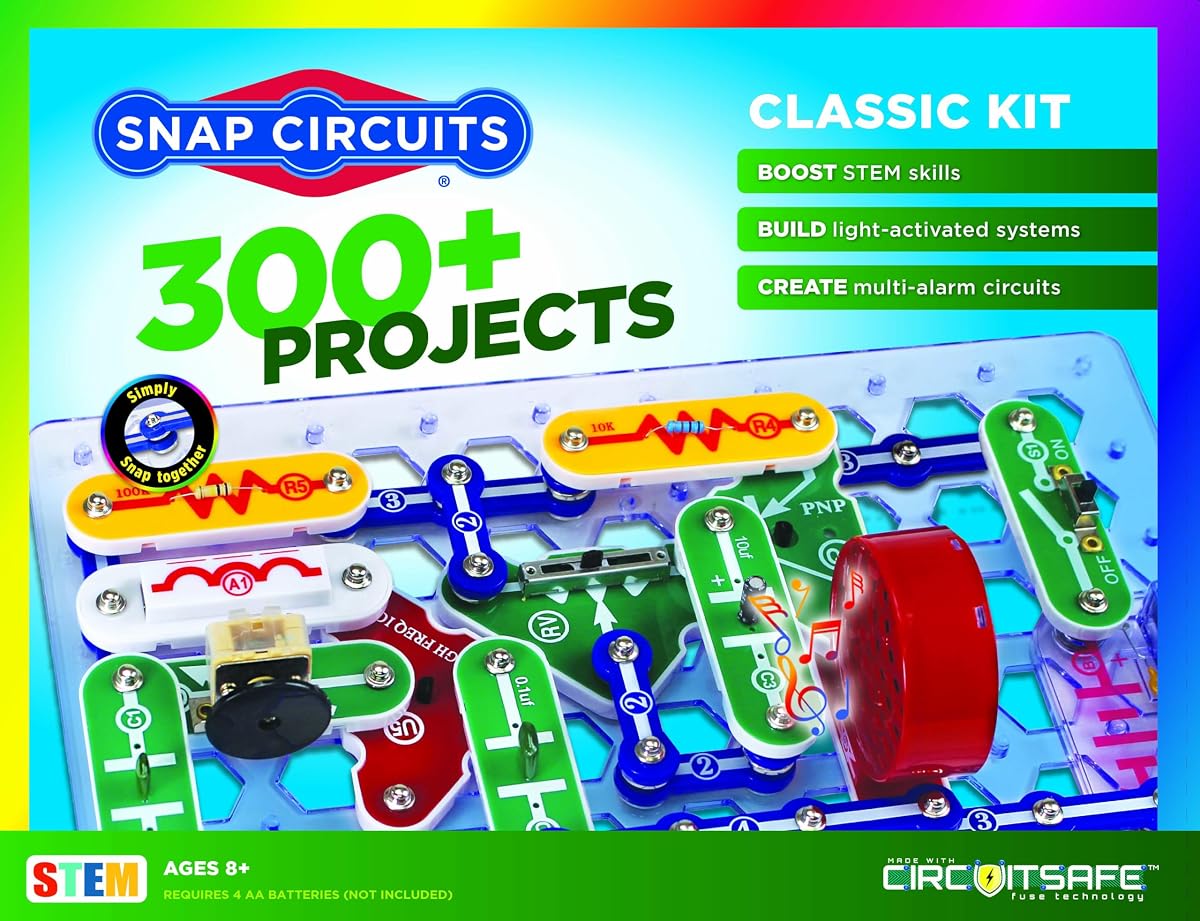
SNAP CIRCUITS Classic SC-300 STEM Electronics Kit
4.8Editor score
300+ snap projects
No tools or soldering
Award winning STEM kit
This guide compares ten top electronics kits for teens to help you choose the best STEM learning tools for coding robotics and soldering projects.
Electronics kits for teens offer a hands-on way to learn engineering coding and circuit design through fun practical projects that build real technical skills.
We reviewed ten highly rated kits focusing on project variety ease of use component quality and educational value to find the best options for young makers.
Each pick shows what makes the kit stand out including project types and learning tools so you can find the right fit for your teen’s interests and budget.
4.8Editor score

4.7Editor score

4.5Editor score
Below you will find a detailed side-by-side comparison of all ten electronics kits to help you quickly identify which one matches your teen’s skill level and interests.


The ELEGOO Mega 2560 R3 Starter Kit leads our list with its comprehensive component set and structured learning path designed for serious young makers.
We may earn a commission when you buy through this link, at no additional cost to you.
It includes over 200 parts and 35 guided projects covering everything from simple LEDs to complex motor control and sensor arrays for advanced STEM exploration.
While it is pricier than basic kits the included storage and pre-soldered modules reduce setup friction significantly making it worth the investment.
Teens who want a robust platform for long term coding and hardware development will find this kit provides the most complete foundation available.
With 54 digital I/O pins and 16 analog inputs this board supports complex builds that require many sensors and actuators simultaneously.
Guided lessons with example code let teens modify parameters like timing and thresholds to turn exercises into custom interactive projects easily.
We may earn a commission when you buy through this link, at no additional cost to you.
The ELEGOO UNO R3 Project Starter Kit offers an accessible entry point for beginners wanting to learn Arduino programming without breaking the bank.
We may earn a commission when you buy through this link, at no additional cost to you.
It packs 200 components across 63 types enabling projects like RFID access environmental monitoring and motor control through detailed step by step tutorials.
Though it lacks the memory depth of the Mega board it provides all essential parts for most introductory electronics and coding lessons for teens.
This kit is ideal for students starting their STEM journey who need reliable hardware and structured guidance to build confidence quickly.
From ultrasonic sensors to keypads and servos the variety of included modules supports a broad range of creative interactive project ideas.
Pre-soldered modules and a solderless breadboard mean teens can jump straight into coding and testing without worrying about soldering skills first.
We may earn a commission when you buy through this link, at no additional cost to you.
The ELEGOO UNO R3 Smart Robot Car Kit stands out for delivering a fully functional programmable robot that teens can build drive and customize.
We may earn a commission when you buy through this link, at no additional cost to you.
Its onboard camera enables FPV video control while ultrasonic and line tracking sensors allow for autonomous navigation and obstacle avoidance experiments.
Keyed connectors simplify the assembly process reducing wiring errors and helping teens focus on coding logic rather than struggling with loose connections.
For teens fascinated by robotics this kit bridges the gap between assembly coding and real world engineering applications perfectly.
The camera module lets users view what the car sees in real time making navigation and control more intuitive and engaging for makers.
Built in modes for line tracking and obstacle avoidance teach teens how to program sensors for decision making without human input.
We may earn a commission when you buy through this link, at no additional cost to you.
The SNAP CIRCUITS Classic SC-300 delivers exceptional educational value with over 300 projects that teach circuit basics through safe snap together components.
We may earn a commission when you buy through this link, at no additional cost to you.
Teens can build radios doorbells and games instantly without any soldering or tools making it an ideal introduction to electrical concepts.
Its bright color coded system and easy storage keep teens engaged and organized while learning about current flow and component functions hands on.
This kit is perfect for families seeking a safe accessible and highly rated option to spark interest in electronics without technical complexity.
The snap on design removes barriers like soldering or complex wiring so learners can focus entirely on understanding how circuits work.
Recognized by multiple organizations for educational excellence this kit maintains high quality standards that parents and teachers trust.
We may earn a commission when you buy through this link, at no additional cost to you.
The MiOYOOW DIY Bluetooth Speaker Kit offers teens a practical way to practice soldering while creating a usable speaker they can use daily.
We may earn a commission when you buy through this link, at no additional cost to you.
It features a pre-soldered amplifier board so learners can focus on assembling LED circuits and wiring without being overwhelmed by complex soldering early on.
The resulting speaker supports Bluetooth music playback and comes with a clear manual guiding each step to ensure successful assembly and operation.
For teens ready to move beyond plug in kits this project provides meaningful hands on experience with real electronics and component assembly.
Working on this kit helps develop steady hand skills and component identification essential for more advanced electronics projects later on.
The acrylic case allows teens to see internal wiring clearly while protecting components and giving a professional finish to the build.
We may earn a commission when you buy through this link, at no additional cost to you.
The ELEGOO UNO R3 Super Starter Kit is designed to make the first steps into electronics as smooth and educational as possible for new makers.
We may earn a commission when you buy through this link, at no additional cost to you.
With 22 guided lessons it covers LEDs sensors motors and displays providing a balanced overview of inputs outputs and control logic.
Teens can learn to code in Arduino IDE using provided examples that they can tweak to experiment with alarms monitors and reaction games.
Its accessible price point and straightforward layout make it an excellent choice for schools or home environments introducing coding hardware.
Combining visual components with code exercises helps teens connect abstract programming concepts to real physical behaviors effectively.
Despite its lower cost this kit maintains high quality components that are durable enough for repeated use in classroom or home settings.
We may earn a commission when you buy through this link, at no additional cost to you.
The DIY Bluetooth Speaker Kit with LED Light Show adds a creative visual twist to soldering projects with a dynamic light visualizer synced to music.
We may earn a commission when you buy through this link, at no additional cost to you.
Its high clarity instruction guide with photos ensures teens can follow every step accurately even if they are still building soldering confidence.
The finished speaker includes two inch drivers and a clear case that showcases the PCB and wiring while delivering decent sound output for casual listening.
This kit appeals to makers who enjoy both audio and visual effects making it a great way to practice soldering while building a fun gadget.
The 10 LED visualizer reacts to audio frequencies creating an immersive experience that makes the project feel more interactive and modern.
Soldering this board gives teens practice with heat control and joint quality essential for building reliable custom circuits later in their career.
We may earn a commission when you buy through this link, at no additional cost to you.
The MicroKits Theremin Electronics Kit offers a unique creative challenge where teens build an instrument that produces sound through hand movement in electric fields.
We may earn a commission when you buy through this link, at no additional cost to you.
It combines music and physics teaching teens about capacitance and signal processing without requiring soldering making it accessible to younger learners.
The colorful 22 page guide walks through each step clearly allowing users to test their work frequently to ensure the circuit functions correctly.
This kit is ideal for music or science enthusiasts looking for something different from standard LED or sensor projects that sparks curiosity.
Building a theremin demonstrates how invisible fields interact with circuits giving teens a tangible way to understand abstract physics concepts.
Using a breadboard ensures the circuit can be modified or fixed easily if a component fails during testing or experimentation.
We may earn a commission when you buy through this link, at no additional cost to you.
The ELEGOO 37-in-1 Sensor Modules Kit expands existing Arduino projects with a wide range of inputs including motion sound and environmental sensors.
We may earn a commission when you buy through this link, at no additional cost to you.
Teens can mix and match modules to build complex systems like automated alarms or environmental monitors using the included example code and diagrams.
Its modular design lets learners start small and grow into more sophisticated setups by adding new sensors as their coding skills improve.
For those who already own a board this kit is the most versatile way to explore the full potential of electronics and data collection.
With 37 distinct sensors teens can prototype diverse applications from robotics to home automation without buying separate kits for each idea.
Adjusting thresholds and timing in code helps teens understand how sensor data translates into real world decisions and actions.
We may earn a commission when you buy through this link, at no additional cost to you.
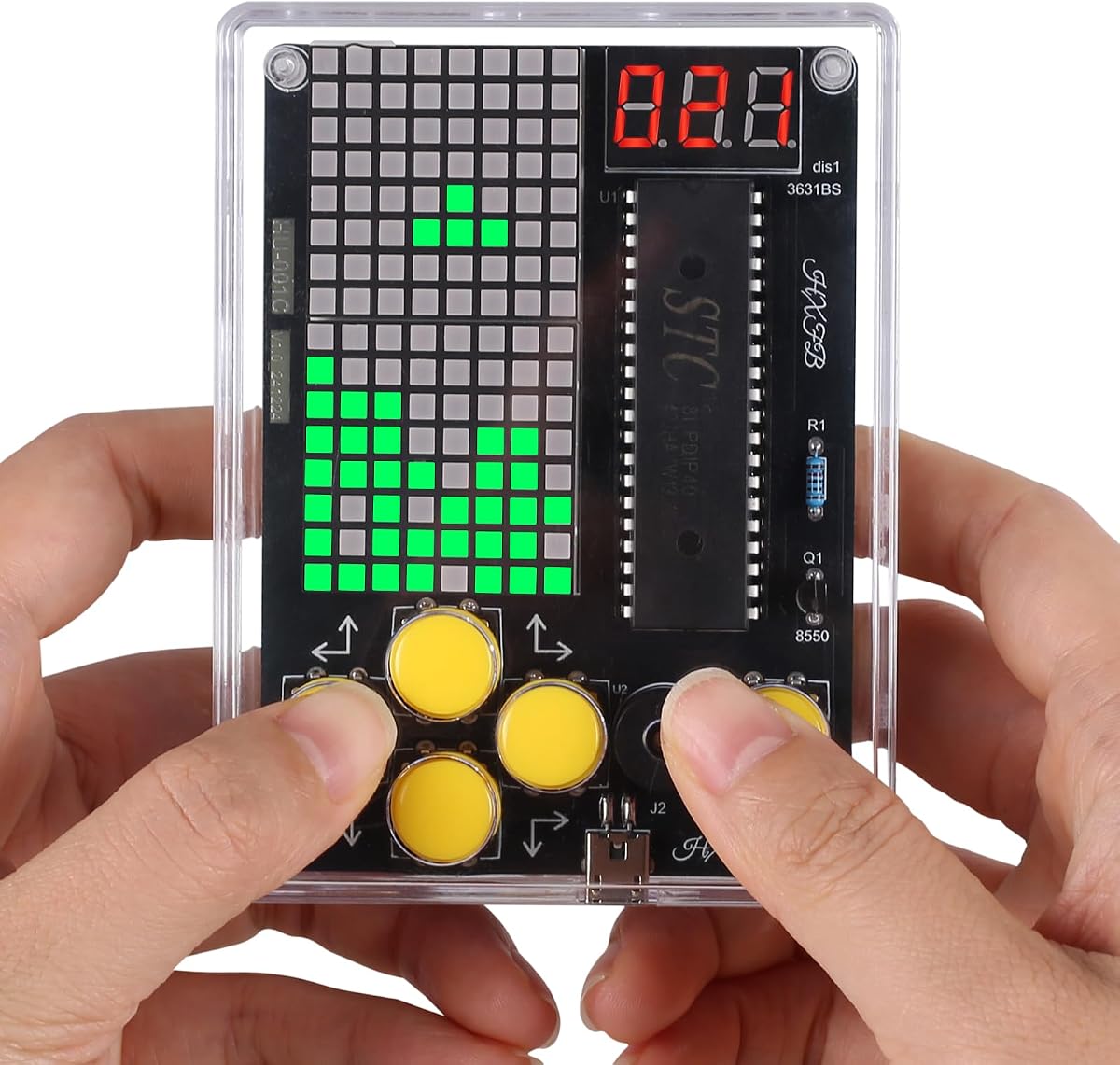
The PEMENOL 7-in-1 DIY Game Soldering Kit turns electronics into a fun challenge where teens build a single device that runs multiple interactive games.
We may earn a commission when you buy through this link, at no additional cost to you.
Three difficulty levels allow users to pace their learning from basic assembly to more complex soldering techniques without feeling overwhelmed.
Detailed guides and video support help ensure the build goes smoothly so teens can focus on the satisfaction of playing games they made themselves.
This kit is an engaging entry point for teens who prefer game based projects and want to develop soldering skills through play.
Starting with easier tasks and gradually increasing difficulty builds confidence and competence before tackling harder soldering challenges.
Having multiple interactive functions makes the finished project more rewarding and encourages teens to explore and experiment with the build.
We may earn a commission when you buy through this link, at no additional cost to you.
Choosing the right electronics kit depends on your teen’s experience level goals and how much hands on work they are ready to tackle.
For beginners consider kits that require no soldering like Snap Circuits or breadboard based kits that focus on coding logic and simple circuits without needing tools.
If your teen has some experience or wants to learn soldering look for kits that include clear guides pre-soldered sections and manageable component counts.
Kits with many guided projects let teens progress from basics like blinking lights to complex tasks like motor control and sensor integration over time.
Look for kits that provide example code and tutorials that explain how to modify and expand projects rather than just following fixed instructions.
High quality components like durable wires clear printed boards and organized storage help teens stay engaged and reduce frustration during assembly.
Brands like ELEGOO and MicroKits are known for reliable parts and thoughtful packaging that makes finding parts easier.
Choose kits that teach broader concepts like circuits and physics or coding and automation rather than just following assembly steps blindly.
Kits that explain why parts work help teens apply what they learn to new builds and independent projects.
Soldering kits teach essential skills but require patience and steady hands so ensure your teen is ready for this step before buying one.
Some kits offer partial soldering or plug-in modules to ease the transition into full component assembly.
Kits that work with popular boards like Arduino allow teens to buy additional sensors later and continue building on their initial setup.
Consider whether the kit is a one time project or a foundation for long term learning and experimentation.
Kits with labeled cases or compartments help keep small parts like resistors and LEDs organized and accessible for repeated use.
Good organization saves time during projects and reduces lost parts that could hinder progress.
Always read the tutorial instructions fully before starting a project to understand the components and steps involved.
Keep electronic parts in their original storage case or container to prevent damage and make finding pieces easier.
If the kit includes soldering tools use them in a well ventilated area and let components cool before handling to avoid burns.
Most kits are designed for teens ages 13 and up though some like Snap Circuits work for younger kids. Check manufacturer age recommendations based on complexity.
Many kits include pre-written code so teens can run projects without writing their own. Others teach coding step by step through guided lessons.
Yes most kits come with reusable components that can be repurposed for new builds once the initial project is finished.
No many beginner kits use plug-in or snap-together components. Soldering kits are available for those ready to learn assembly skills.
Basic kits need no tools. Advanced kits may require screwdrivers wire cutters or a computer for coding so check requirements before buying.
Arduino kits teach coding and electronics together. Snap kits focus on circuit basics. Choose based on whether coding is a goal.
The top picks like the ELEGOO Mega Kit and Snap Circuits offer strong foundations for learning coding and electronics through hands on projects.
Prioritize kits that match your teen’s skill level and interests to ensure they stay engaged and motivated throughout their learning journey.
Always check current availability and product details before purchasing since offerings and prices may change over time.