
G-PLUG 15FT RG8X
4.5Editor score
Affordable price point
Flexible PVC jacket
Gold plated pins
Discover the top coax cables for ham radio setups. This guide compares ten options for low loss, durability, and signal quality to optimize your amateur radio
Choosing the right coaxial cable is critical for any ham radio enthusiast. A quality cable ensures minimal signal loss and maximum transmission efficiency across your equipment. This guide evaluates ten top-rated options to help you find the perfect fit for your specific needs.
We compared these products based on shielding quality, connector durability, and overall performance metrics. Each selection offers unique advantages whether you need flexibility, ruggedness, or low loss for high-frequency bands. Our analysis focuses on real-world usability for both mobile and base station installations.
Each pick highlights key features and potential trade-offs to simplify your decision process. We also include a detailed buying guide to help you understand technical specifications like impedance and conductor types. Keep in mind that product prices and availability can change over time.
4.5Editor score

4.6Editor score
4.7Editor score
This side-by-side comparison highlights the core specifications of each cable model. Use this table to quickly identify which option matches your length requirements and performance needs.


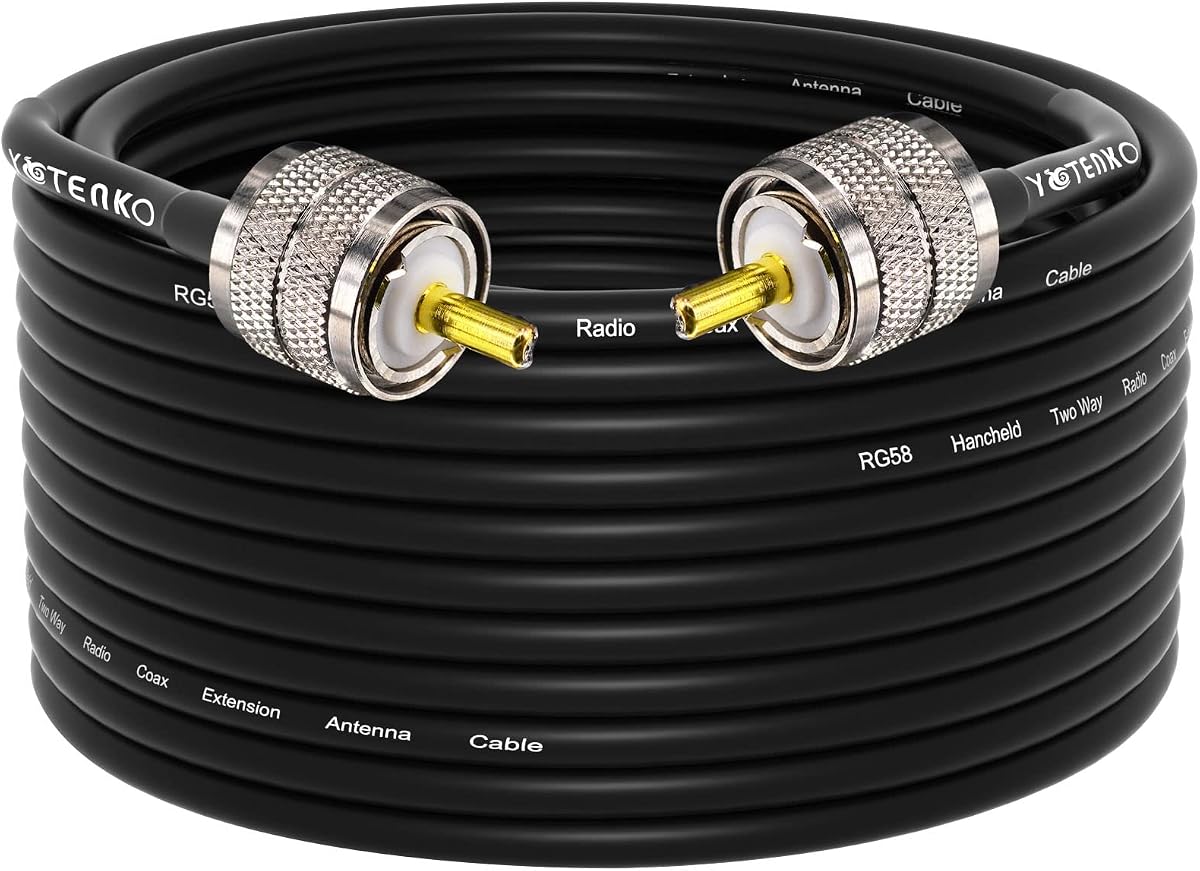

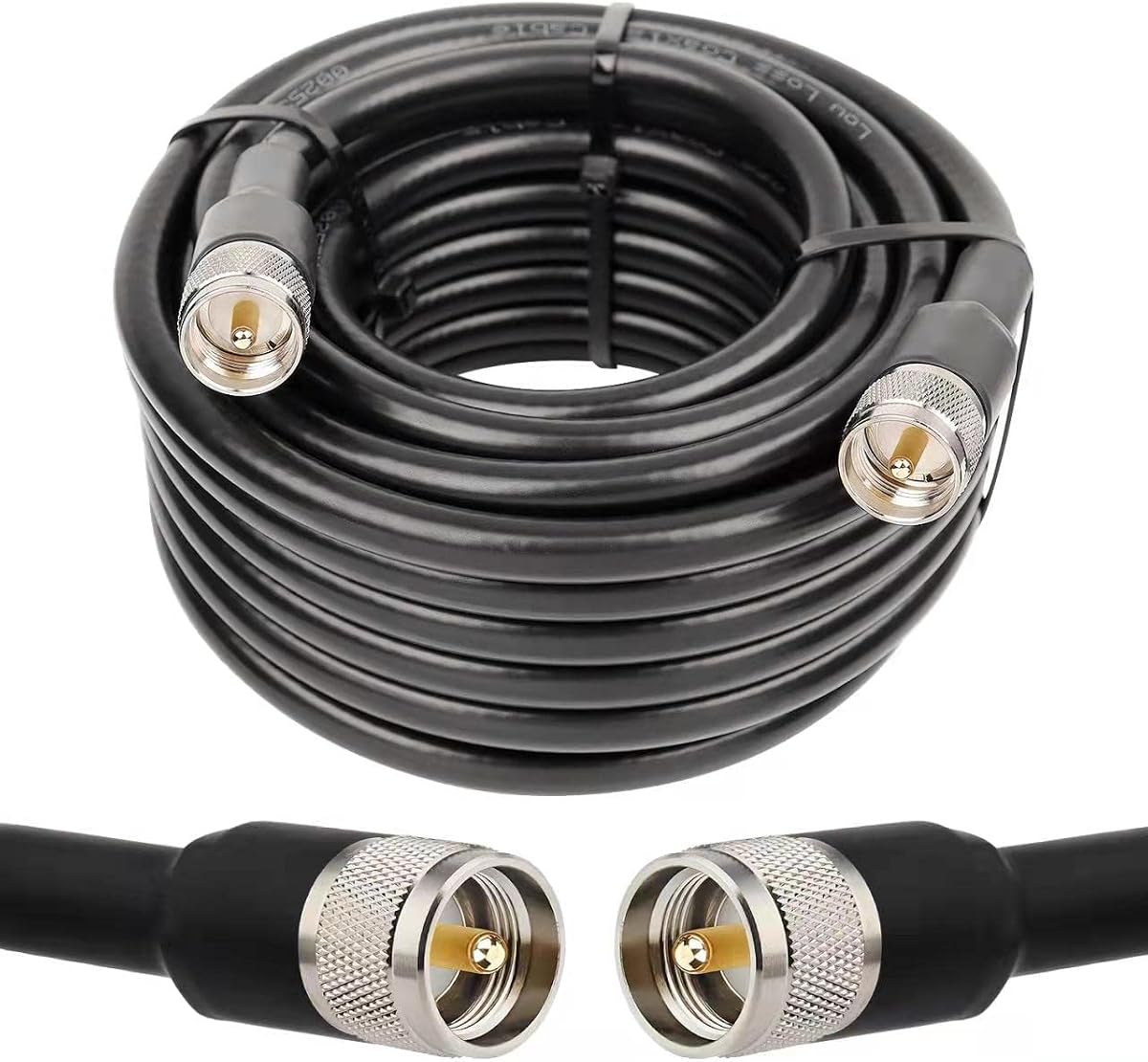

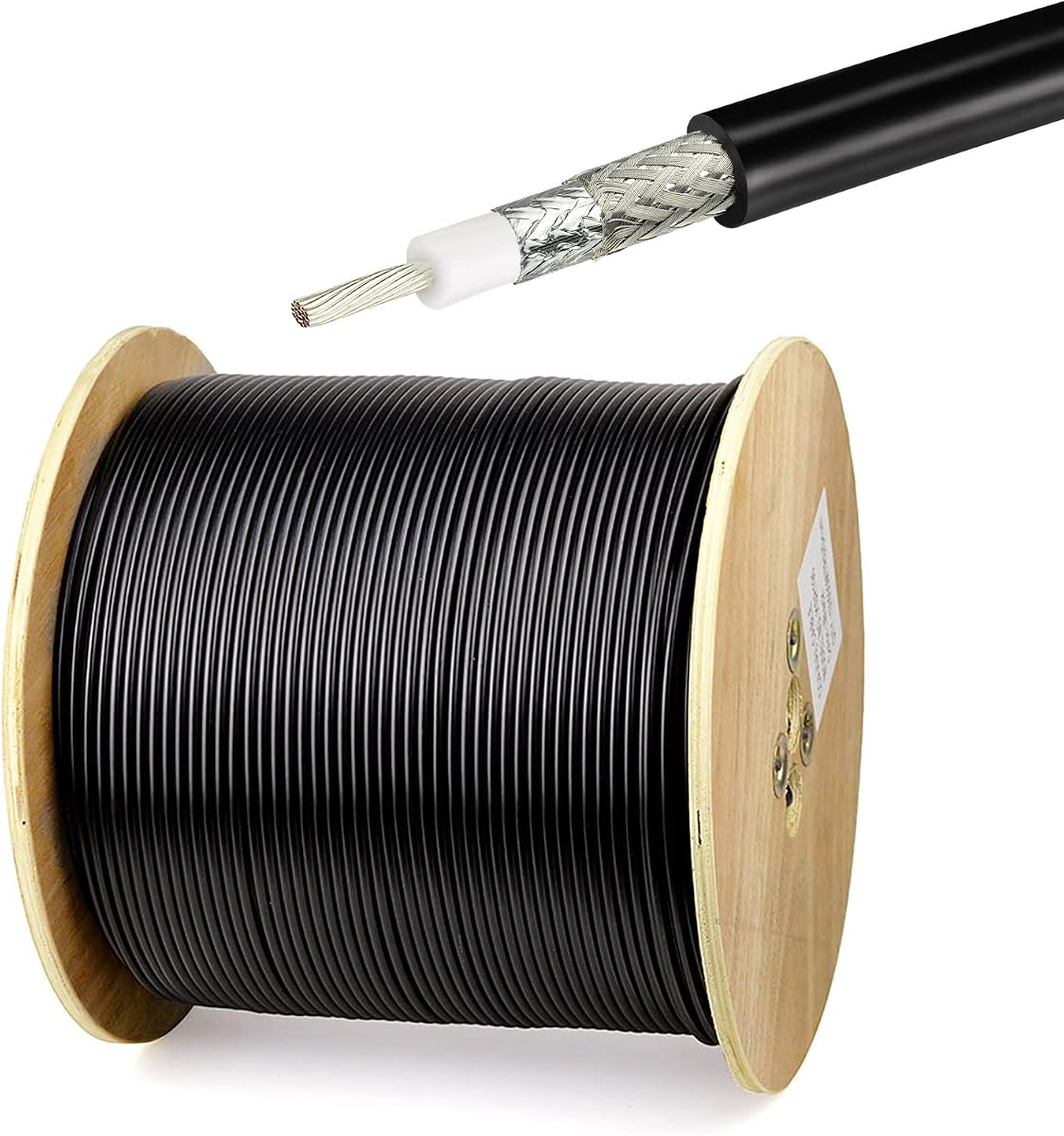
This RG8x coaxial cable stands out as a top contender for ham radio operators seeking reliable performance. It features a pure copper inner conductor that ensures low signal loss during transmission. The double shielding design effectively prevents interference from external sources.
We may earn a commission when you buy through this link, at no additional cost to you.
Its high quality UHF connectors are fully molded with nickel plating and gold plated center pins. This construction provides secure connections that resist corrosion over time. The cable is designed to handle frequencies up to 300 MHz effectively.
While the cable is robust and durable, it may be slightly heavier than thinner options like RG58. This extra weight is acceptable given the improved signal quality it delivers. It is a practical choice for both indoor and outdoor installations.
Anyone setting up a base station or mobile radio will benefit from this cable. It supports high power applications well and works with various antenna systems. We recommend it for users who prioritize signal integrity.
The pure copper core minimizes attenuation and maintains strong signals over distance.
Double shielding and a strong PVC jacket protect against environmental wear and tear.
We may earn a commission when you buy through this link, at no additional cost to you.
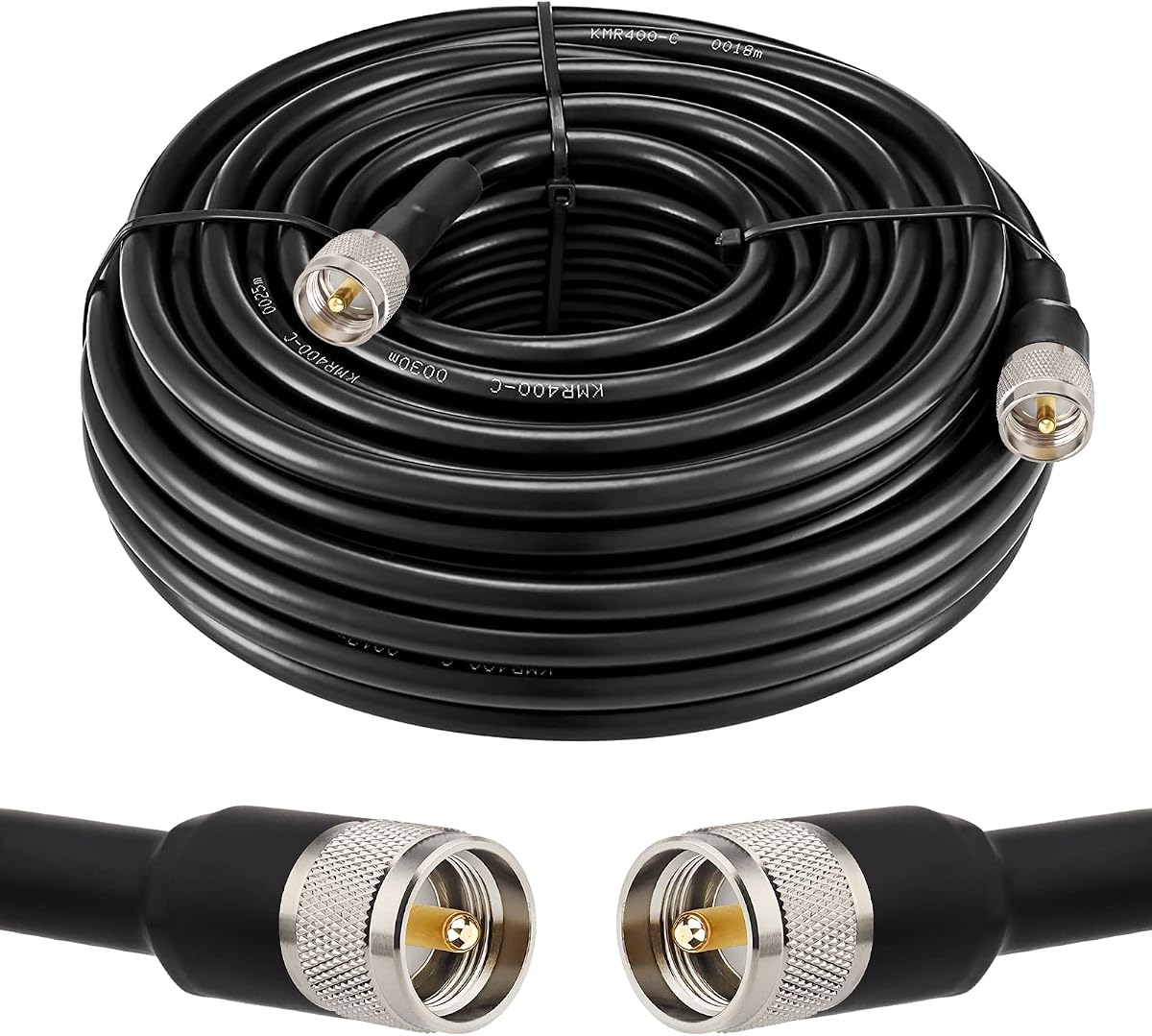
MOOKEERF KMR400 cable is built for serious operators who demand minimal signal loss. At high frequencies like 450MHz the loss remains under 2.8dB. This makes it excellent for long distance high frequency use cases.
We may earn a commission when you buy through this link, at no additional cost to you.
The structure includes a copper clad aluminum inner conductor with aluminum foil and tinned copper braid. This combination offers maximum protection for your signal over large distances. The heat shrink tubes prevent connectors from pulling out under tension.
One trade-off is the price which is higher than standard RG8X options. However the performance benefits justify the cost for critical applications. The jacket is waterproof and handles outdoor environments well.
This cable works well for marine VHF radio and amateur radio setups. If you need reliability for SWR meters or antenna analyzers this is a solid choice. It resists oxidation and corrosion effectively.
Designed to maintain signal integrity even at UHF frequencies like 450MHz.
Long adhesive lined heat shrink tubes secure connections against physical stress.
We may earn a commission when you buy through this link, at no additional cost to you.
STEREN RG8X coaxial cable offers a solid upgrade from standard RG58 options. It is designed specifically for radios and HAM setups. The fully molded PL259 connectors ensure reliable connections for your antenna systems.
We may earn a commission when you buy through this link, at no additional cost to you.
This cable supports base station antennas and HF setups effectively. The nickel plating adds durability to withstand challenging conditions. It is built to last with a robust construction for both indoor and outdoor use.
The fixed 50ft length may not suit all custom installations. Users requiring specific lengths may need to cut and crimp. However for many base setups this length is sufficient.
It is compatible with antenna tuners and meters for complete setups. We recommend it for radio enthusiasts looking for dependable performance. The cable supports 10 meter antennas well.
Fully molded nickel plated connectors prevent signal loss at connection points.
Suitable for vehicle installs and portable radio stations easily.
We may earn a commission when you buy through this link, at no additional cost to you.
G-PLUG 15FT RG8X provides an affordable solution for ham radio setups. It features a pure copper core to maintain signal strength across short distances. This is ideal for connecting radios to meters or tuners.
We may earn a commission when you buy through this link, at no additional cost to you.
The cable includes gold plated pins and nickel plated brass bodies for stability. The rugged PVC jacket protects against outdoor elements while remaining flexible. It supports reliable output for CB and HAM tuning.
The 15ft length is specific to short jumper needs. You may need longer runs for antenna bases. However for specific short connections this is a great value.
We recommend this for hobbyists or small setups. It minimizes signal leakage and interference effectively. This is a practical solution for quick connections.
Provides solid performance at a price point accessible to many.
Flexible design allows easy routing in tight spaces or vehicles.
We may earn a commission when you buy through this link, at no additional cost to you.
RG58 coaxial cable is designed for easy routing in tight spaces. Unlike stiffer cables it passes through window frames effortlessly. It is optimized for HF and VHF radio bands well.
We may earn a commission when you buy through this link, at no additional cost to you.
The 6cm extended heat shrink tubing secures the connectors firmly. This distributes stress away from solder points to prevent failure. It uses pure bare copper shielding for interference rejection.
While flexible it does have higher loss compared to RG8X. This trade-off is acceptable for mobile installations. It prevents pinching and ensures stable connections.
We recommend this for mobile radio and field days. It is a dependable alternative to standard 50ft cables. The lightweight nature makes it easy to deploy.
Ultra flexible design allows simple installation in vehicles.
Extended heat shrink tubing protects solder points from stress damage.
We may earn a commission when you buy through this link, at no additional cost to you.
exgoofit RG8X offers a 100ft length for longer setups. The inner conductor is 16AWG made of tinned pure copper strands. This performs better than common 17AWG conductors.
We may earn a commission when you buy through this link, at no additional cost to you.
It features double shielding to prevent signal leakage effectively. The fully molded nickel plated connectors are secure and reliable. This is waterproof for both indoor and outdoor use.
The longer length is ideal for base stations far from antennas. It may be heavier to install than RG58. But the signal transfer benefits are clear.
This cable supports CB and HAM radio systems well. We recommend it for those needing longer runs without multiple splices. It comes with a solid warranty.
100 foot length suits setups with significant distance from equipment.
Double shielding and copper strands minimize loss over longer runs.
We may earn a commission when you buy through this link, at no additional cost to you.
XRDS 100FT KMR 400 delivers ultra low loss for demanding applications. The larger diameter means better signal retention than standard RG58. It supports a 20-year outdoor exposure rating.
We may earn a commission when you buy through this link, at no additional cost to you.
The connectors use a clamp design rather than crimp for security. Adhesive lined heat shrink tubes seal ends against moisture. This prevents failure in harsh environments.
This is a premium option with a higher price tag. The performance justifies it for critical links. The jacket is UV resistant and rugged.
We recommend it for marine or extreme setups. It ensures stable connections for SWR meters. This is a solid choice for durability.
UV proof jacket and clamp connectors ensure decades of outdoor use.
Larger center conductor supports better retention than RG58 types.
We may earn a commission when you buy through this link, at no additional cost to you.
MOOKEERF RG8 jumper cable delivers low loss performance at 450MHz. The loss is under 1.5dB for reliable transmission. It is built like LMR400 equivalent for quality.
We may earn a commission when you buy through this link, at no additional cost to you.
Connectors use a clamp design to prevent breaking. The adhesive lined shrink tubes seal out moisture and contaminants. This ensures stability during outdoor extreme weather.
The jacket is high quality PVC and waterproof. It handles marine and HF radio use well. The connectors are well integrated into the cable.
We recommend this for marine boat VHF setups. It prevents fall apart and breakage over time. This is a heavy duty choice.
Clamp design and adhesive tubes prevent connector failure.
Low loss specs ensure clear communication at high frequencies.
We may earn a commission when you buy through this link, at no additional cost to you.
XRDS -RF RG-316 is a miniature coax perfect for tight installs. The diameter is only 0.1in for extra flexibility. It works great for VHF UHF interconnections and ham radio.
We may earn a commission when you buy through this link, at no additional cost to you.
The core is silver plated copper for efficiency and low loss. The jacket is flexible teflon for harsh outdoor environments. It handles frequencies up to 6GHz well.
This cable is thin and lightweight making it ideal for portable setups. You will need to crimp your own connectors for use. This is standard for RF cable.
We recommend it for antenna cables and small systems. It offers very low signal loss. This is a great fit for mobile.
Tiny diameter allows routing in the tightest vehicle spaces.
Teflon jacket and silver plating ensure durability and low loss.
We may earn a commission when you buy through this link, at no additional cost to you.
Superbat RG8x coaxial cable is a step up from RG58. It is recommended for high powered applications well. The SWR is less than 1.15 for clean transmission.
We may earn a commission when you buy through this link, at no additional cost to you.
The cable features waterproof PVC and can be strapped without interference. It supports better signal transfer with minimum loss over distances. It works for cell boosters and ham radios.
While the package is 50ft they offer custom lengths. This is ideal for specific station layouts. The cable is flexible and handles higher frequencies.
We recommend this for custom RF setups. Professional manufacturers provide it. It is well compatible with various connector types.
Designed by manufacturers for reliable high performance.
Compatible with many connector types for flexible use.
We may earn a commission when you buy through this link, at no additional cost to you.
Selecting the right coax cable involves understanding impedance, length, and shielding.
Ensure your cable matches the 50 Ohm impedance of your radio gear to prevent signal reflection. Mismatched impedance can cause high SWR and damage transmitters over time.
Look for cables explicitly rated at 50 Ohm to maintain system compatibility.
Measure the distance between your radio and antenna to choose the correct length. Longer cables introduce more signal loss so minimize length whenever possible.
Select a length that avoids excess slack which can cause tangles or damage.
Double shielding or braided copper shields protect your signal from external interference. High interference areas need strong shielding to maintain clarity.
Check for descriptions mentioning double shielding or braided tinned copper.
PL259 UHF connectors are standard for most HAM radios and antennas. Ensure connectors are nickel or gold plated to resist corrosion.
Secure connectors with clamp or adhesive designs prevent accidental disconnection.
Cable flexibility matters for routing through tight spaces like vehicle windows or walls. Thinner RG58 cables bend easier than thicker RG8 options.
Choose flexible jackets if you need to route cables around corners or bends.
Outdoor cables need waterproof and UV resistant jackets to withstand weather elements. Look for PVC or Teflon jackets designed for outdoor exposure.
Durable jackets extend the lifespan of your installation in harsh conditions.
Lower loss ratings like KMR400 or LMR400 equivalents preserve signal strength at high frequencies. Check specs for attenuation dB ratings at specific frequencies.
Prioritize low loss specs for longer runs or high band operations.
Set a budget based on your needs balancing price with performance requirements. Entry level options work for simple CB setups while premium ones suit HF.
Higher cost cables often offer better longevity and signal stability.
When installing, ensure connectors are fully tightened to prevent signal leaks and loss. Use a wrench carefully to avoid damaging the connector threads.
Route cables away from power lines and electrical sources to minimize interference. Keep the jacket from sharp edges that could cause cuts or wear.
Inspect cables periodically for signs of wear such as cracks or loose connectors. Clean connectors with contact cleaner to remove oxidation buildup.
RG8X cables have a larger diameter and thicker conductor than RG58 which results in lower signal loss. RG8X handles more power and suits base stations better while RG58 is more flexible for mobile setups.
Most cables listed have waterproof PVC jackets suitable for outdoor use. However for long term UV exposure choose those with UV resistant or Teflon jackets for maximum durability.
Use low loss cable types like KMR400 and minimize total length where possible. Keep connections tight and avoid sharp bends that damage the internal structure.
PL259 connectors are standard for most HAM and CB radios. Always check your radio manual to confirm the required connector type before purchase.
SWR measures how well power is transmitted from your radio to the antenna. High SWR indicates mismatch which can cause signal loss and equipment overheating.
While you can cut them you will need proper crimp tools to attach connectors. Some sellers offer custom lengths so check the product options before cutting.
Yes mobile installations need coax to connect the radio to the antenna. Shorter flexible cables like RG58 work best inside vehicles to avoid clutter.
High quality coax cables can last 5 to 20 years depending on conditions. UV resistant jackets help outdoor cables last longer than standard indoor types.
We highlighted top picks ranging from budget RG8X options to premium KMR400 cables. Each offers unique benefits for different ham radio applications and environments.
Prioritize low loss and shielding quality for long term performance. Consider your installation needs like flexibility or length before purchasing.
Remember to verify current prices and availability as these change frequently. Choose the cable that best matches your specific radio setup goals.