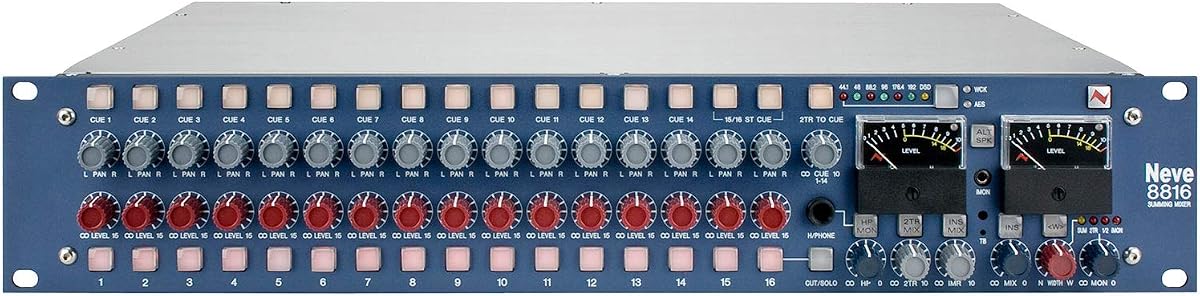
Neve 8816 Summing Mixer
Sixteen channel transformer balanced summing
Dual headphone outputs for monitoring
Main alternate speaker output options
Discover the top analog summing mixers for professional audio production. This guide compares features, sound quality, and connectivity across ten leading
Analog summing mixers provide a unique way to blend digital tracks into a cohesive analog signal. They offer warmth and depth that plugins often struggle to replicate. Choosing the right unit depends on your studio needs and budget constraints.
We evaluated ten prominent mixers based on channel count, transformer quality, and build durability. Each model brings distinct sonic characteristics to the table. Our analysis focuses on how they handle complex mixes and signal flow.
Every pick highlights specific strengths like EQ curves or monitoring options. Prices fluctuate frequently so verify current listings before buying. This guide helps you find the perfect match for your audio workflow today.

5.0Editor score

4.8Editor score
This side by side comparison examines ten top models ranging from basic passives to high end studio consoles. We look at channel counts and specific features to help you decide quickly.




The Neve 8816 Summing Mixer stands as a pinnacle of analog audio engineering. It offers sixteen channels of transformer balanced summing for a warm cohesive sound. This unit is designed for studios needing serious monitoring and output flexibility.
We may earn a commission when you buy through this link, at no additional cost to you.
Its transformer balanced design ensures clean signal paths with minimal noise. The monitoring section allows for dual headphone outputs and flexible speaker routing. You get precise control over your main and alternate speaker setups.
While the price is high the sound quality justifies the investment for professionals. The physical size requires ample desk space which might not fit smaller studios. However the sonic benefits are unmatched in its class.
Buy this if you demand the highest fidelity analog summing available. It is ideal for high budget productions where every detail matters. This mixer will elevate your final master significantly.
The balanced architecture ensures noise rejection and signal integrity across all sixteen channels.
Dual headphone outputs and alternate speaker switches provide versatile monitoring for any session.
We may earn a commission when you buy through this link, at no additional cost to you.
The Radial Mix 2:1 offers a straightforward way to sum two signals into one mono output. It is a passive mixer meaning it requires no power to function. This simplicity makes it a robust choice for basic summing tasks.
We may earn a commission when you buy through this link, at no additional cost to you.
Its passive nature ensures no coloration from active electronics. The build is tough enough for road use and studio setups. You get a clean summing solution without the complexity of knobs or switches.
The main limitation is the two input cap which restricts expansion. If you need more than two sources this unit will not suffice. Still for specific applications it performs reliably every time.
Choose this for simple summing needs on a tight budget. It works great for blending two sub mixes or returning aux sends. It is a practical tool for any signal chain.
Being passive means no power supply is needed and there is zero active noise introduced.
Perfect for combining two stereo tracks into a single mono bus quickly and efficiently.
We may earn a commission when you buy through this link, at no additional cost to you.
The Allen & Heath Xone:43 brings high performance analog mixing with its signature VCF system. It features four main channels plus a dedicated microphone input. This unit is widely acclaimed for its smooth analog summing capabilities.
We may earn a commission when you buy through this link, at no additional cost to you.
Its VCF system allows precise control over frequencies with resonance options. Each channel has a send and return for external effects with dry wet control. The booth and record outputs are separate for professional live setups.
While designed for DJing the summing quality suits studio applications too. The limited input count means it fits smaller rigs but may need upgrades later. The analog path is transparent and musical in any context.
Pick this for a blend of studio and live flexibility. It shines when you need tight control over filter frequencies and effects. This mixer delivers exceptional value for its feature set.
The VCF provides high and low pass filtering with resonance for unique sound shaping.
Per channel send return with dry wet knobs integrates external FX seamlessly.
We may earn a commission when you buy through this link, at no additional cost to you.
The Rupert Neve Designs 5059 is a satellite mixer bringing Shelford tone to your studio. It offers sixteen channels plus two return paths for flexible mixing. This unit captures the essence of analog warmth with modern reliability.
We may earn a commission when you buy through this link, at no additional cost to you.
Its Shelford edition styling hints at the sonic quality inside. The analog core ensures that your digital tracks gain depth and character. It is built to withstand years of daily use in critical environments.
The price reflects the premium components and design legacy. It may require specific mounting solutions due to its form factor. However the sonic imprint it leaves is worth the investment for many.
Select this if you seek classic Neve character without a full console. It works as a summing hub for hybrid production setups. This mixer bridges the gap between modern and vintage audio.
Delivers the rich harmonic saturation associated with the revered Shelford series.
Provides enough channels for full project mixing without needing subgroups.
We may earn a commission when you buy through this link, at no additional cost to you.
The Headliner R4 is a four channel rotary mixer with a built in filter. It features frequency and resonance controls to shape your sound uniquely. The aluminum enclosure with wood panels gives it a classic aesthetic.
We may earn a commission when you buy through this link, at no additional cost to you.
Its analog high pass and low pass filters offer signature sound shaping. The potentiometers are genuine Alps ensuring smooth operation. Outputs include balanced XLR and unbalanced RCA for various system compatibility.
While optimized for DJs the analog path is robust and clear. The filter controls allow for creative transitions beyond standard mixing. It fits well in setups needing precise analog manipulation.
Buy this if you want rotary control with filtering features. It is excellent for DJs seeking a distinct sound profile. The build quality supports a classic look and feel.
Adjustable filter settings allow for deep creative manipulation of your tracks.
High quality Alps components ensure smooth volume and gain control over time.
We may earn a commission when you buy through this link, at no additional cost to you.
The Mackie Onyx Series 16 channel mixer combines analog warmth with modern connectivity. It supports multi track recording directly to Mac or PC via USB. This unit offers a complete analog signal path with useful digital features.
We may earn a commission when you buy through this link, at no additional cost to you.
Its Onyx mic preamps provide up to sixty dB of gain with low noise. The digital engine allows user customizable reverbs and delays. Bluetooth streaming lets you play audio directly into a channel strip.
The USB interface might overshadow the pure summing aspect for some users. However the convenience of recording each channel separately is a strong benefit. This mixer is versatile for live and studio use.
Choose this for a hybrid setup needing analog sound and digital recording. It suits projects where direct to file recording is essential. The Onyx pres ensure quality sound at the source.
Award winning preamps deliver up to sixty dB of gain with low noise.
Record multiple channels directly to your computer for flexible post production.
We may earn a commission when you buy through this link, at no additional cost to you.
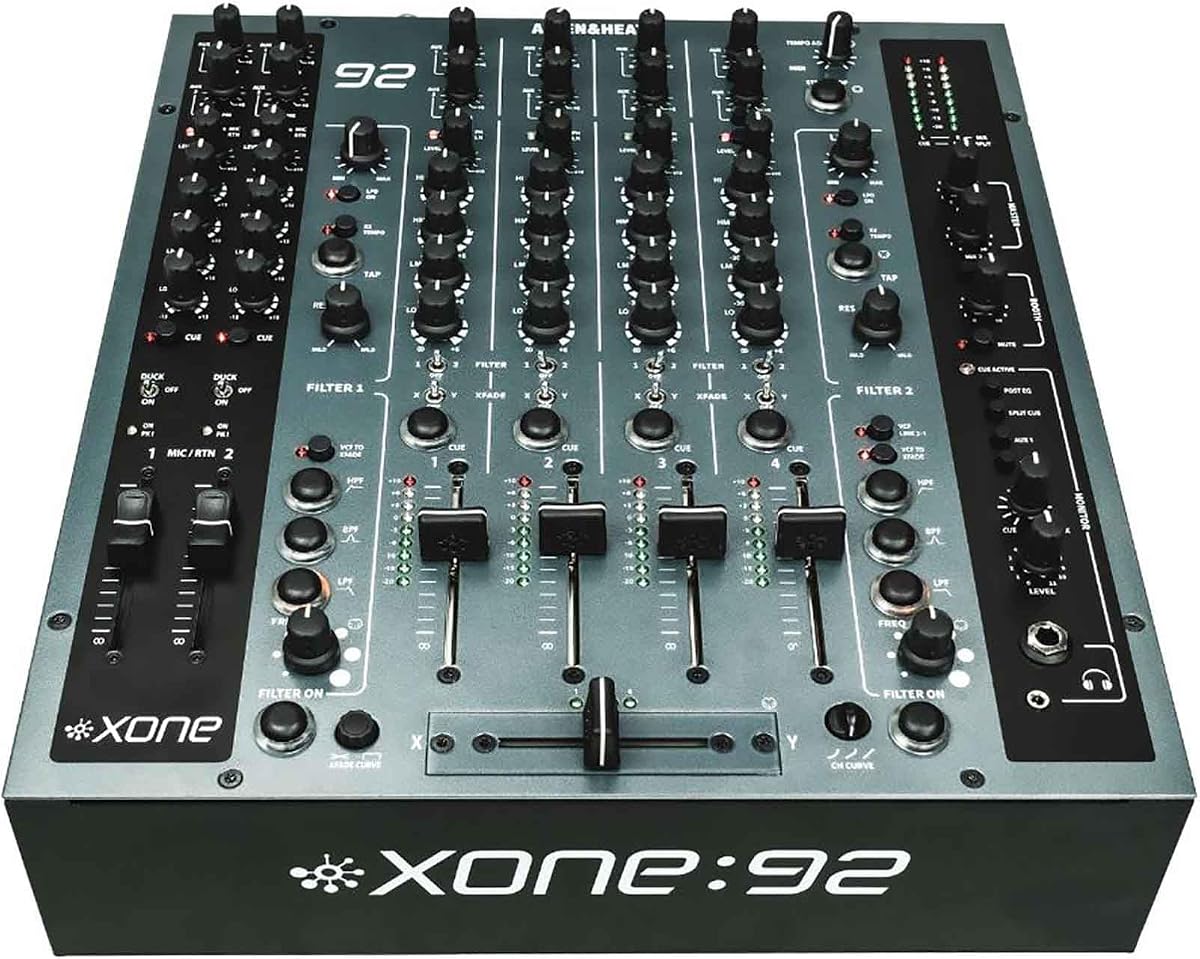
The Allen & Heath Xone:92 Mk2 is a four channel analog DJ mixer with advanced VCF. It offers switching for multimode filters and ample connectivity for external gear. This mixer prioritizes analog control for performance and mixing.
We may earn a commission when you buy through this link, at no additional cost to you.
Its VCF switching allows deep manipulation of frequencies during live sets. Send and return connections facilitate external FX integration. The analog path is pure and responsive for dynamic mixing.
While not a standard summing mixer it provides rich analog blending. Its DJ focus means fewer standard studio inputs. However the sound quality remains top tier for live environments.
Select this for live DJ setups needing analog depth. It offers a tactile interface for precise sound shaping. The analog path ensures a rich and vibrant audio output.
Switching options for VCF modes provide diverse filter characteristics for mixing.
Multiple filter modes allow for creative sound shaping and frequency control.
We may earn a commission when you buy through this link, at no additional cost to you.
The Mackie 1202VLZ4 is a twelve channel compact mixer with legendary Onyx preamps. It delivers exceptional sound with low noise and high dynamic range. This unit is great for small studios needing reliable analog summing.
We may earn a commission when you buy through this link, at no additional cost to you.
Its RF rejection ensures clean signals even in noisy environments. The distortion levels are incredibly low for broadcast and recording. Routing options include aux sends and feedback buses for flexibility.
While limited to twelve channels it covers most small setups efficiently. It lacks some advanced digital features found in larger models. The analog path remains clean and reliable for daily use.
Buy this for compact studios needing quality preamps and routing. It suits broadcast applications requiring low distortion. This mixer offers solid value for its size and capabilities.
Legendary Onyx preamps deliver incredibly low noise and wide gain range.
Strong RF rejection ensures clean audio even with wireless devices nearby.
We may earn a commission when you buy through this link, at no additional cost to you.
The Solid State Logic BiG SiX is a mixing console combining SuperAnalogue pres with a USB interface. It offers sixteen channels and comprehensive monitoring for hybrid production. This unit brings studio quality analog summing to desktop setups.
We may earn a commission when you buy through this link, at no additional cost to you.
Its console grade pres and dynamics processing provide rich sound shaping. The stereo master bus compressor adds polish to your final mix. Comprehensive monitoring ensures precise control over your audio environment.
The price reflects its premium build and feature set. Its size may require dedicated desk space. However the summing quality and monitoring options are unmatched in its class.
Choose this for high end hybrid production needs. It bridges console quality and modern interface convenience. This mixer delivers professional sound and flexibility.
SuperAnalogue mic pres provide studio quality sound with low noise.
Built in master bus compressor adds polish to your mixdown easily.
We may earn a commission when you buy through this link, at no additional cost to you.
The Yamaha MG10 is a ten channel standalone mixer with D-PRE preamps. It features studio grade discrete circuitry for smooth highs and natural bass. This unit is perfect for entry level analog summing and live sound.
We may earn a commission when you buy through this link, at no additional cost to you.
Its one knob compressors make control easy for guitars and vocals. The rugged metal chassis ensures durability for road use. Simple operation allows quick setup without complex configuration.
Lack of USB limits recording options but ensures pure analog paths. The ten channels may be tight for larger projects. Still it is a robust choice for basic needs.
Buy this for reliable analog mixing on a budget. It suits live sound or small studios needing simplicity. This mixer delivers solid performance for entry level users.
Studio grade discrete class A D-PRE preamps provide natural sounding bass.
Simple one knob compressors allow easy control of dynamics.
We may earn a commission when you buy through this link, at no additional cost to you.
Choosing the right analog summing mixer requires understanding your specific workflow and budget. We break down key factors to help you make an informed decision.
Channel count dictates how many tracks you can sum at once. More channels offer flexibility for complex mixes but may require more space. Ensure the unit fits your typical session size.
Match the channel count to your typical project complexity.
Transformers provide warmth and isolation from noise. High quality transformers ensure a clean and rich summing sound. Check specifications for transformer balanced inputs.
Prioritize transformer balanced designs for best sound.
Build quality affects durability and tactile feel. Metal enclosures and robust knobs ensure long term reliability. Check for quality potentiometers in the design.
Look for metal chassis and high grade knobs.
Input options determine what devices you can connect. Ensure you have enough XLR and line inputs. Some units include microphone inputs for live use.
Verify input types match your existing gear.
Monitoring features help you manage your output levels. Look for dual headphone outputs and speaker switches. Good monitoring improves decision making during mixdowns.
Check for dedicated monitoring and headphone options.
Price varies from budget passive to high end consoles. Consider how often you will use the unit. A high end model may not be necessary for occasional use.
Balance budget with frequency of intended use.
Size impacts desk space and portability. Larger units offer more features but may be heavy. Consider transport if you plan to take it on the road.
Ensure dimensions fit your workspace or transport plans.
Extra features like filters or USB may be beneficial. Determine if you need these features for your workflow. Simple summing might not require advanced extras.
Select features that match your specific workflow.
Connect your digital outputs to the mixer's line inputs. Route your master stereo bus to the summing inputs for processing.
Adjust channel levels carefully to avoid clipping on the master. Use the monitoring section to check your final output.
Store the unit in a dry environment. Avoid physical impact to protect internal transformers and connectors.
An analog summing mixer combines multiple digital audio tracks into a single analog signal. This process adds harmonic warmth and depth often missing from in the box mixing.
Transformer balanced mixers offer better noise rejection and warmth. They are ideal for professional environments where signal integrity is crucial for high quality mixes.
Passive mixers can sum signals without requiring power. They are suitable for simple two channel tasks but lack amplification and active controls.
Analog summing adds non linear character and stereo width to digital mixes. It helps glue tracks together with a natural sound that plugins struggle to mimic.
A four to sixteen channel mixer fits most home studios. Consider your typical track count and whether you need extra returns for processing.
Yes, compact passive or small analog mixers exist for travel. Look for lightweight units with robust cases for on the road work.
The Neve 8816 and Allen & Heath Xone:43 stand out as top choices for premium and versatile options. Each offers unique features for specific workflows and budgets.
Prioritize sound quality and build over extra features if you need pure analog performance. Ensure your choice fits your existing gear and available space.
Prices for these mixers fluctuate so always check current listings before purchasing. Finding the right model now will elevate your production quality immediately.