
ASUS Dual GeForce RTX 5060 Ti 16GB
4.7Editor score
2.5-slot compact design
AI Performance 767 TOPS
0dB silent technology
This expert guide compares the top graphics cards for ray tracing performance in 2026 to help you choose the best GPU for realistic lighting and gaming.
Graphics cards for ray tracing have revolutionized gaming by delivering realistic lighting and reflections. Choosing the right GPU ensures smooth performance and immersive visual fidelity in modern titles.
We evaluated ten top models based on architecture, cooling efficiency, and real-world ray tracing capabilities. Our comparison covers both NVIDIA and AMD options across various price points and performance tiers.
Each pick highlights key features and strengths for different needs. Prices and availability change frequently, so verify current details before making your final purchase decision for your gaming setup.
4.7Editor score

4.6Editor score

4.8Editor score
The following table provides a side-by-side overview of key specifications and features for all ten selected graphics cards to help you compare performance and compatibility quickly.




This high-end graphics card offers top-tier performance for ray tracing workloads and modern gaming. Its 4.6 rating reflects user satisfaction with its build quality and thermal management.
We may earn a commission when you buy through this link, at no additional cost to you.
Powered by NVIDIA Blackwell architecture and DLSS 4, it delivers efficient rendering with minimal power draw. The 16GB GDDR7 memory ensures smooth handling of high-resolution textures and complex scenes.
While the price is steep and it needs an 850W minimum PSU, these are reasonable for a flagship card. The WINDFORCE cooling system keeps temperatures stable during extended sessions.
It is ideal for enthusiasts seeking the best visual fidelity and frame rates in ray tracing games. We recommend it for those prioritizing performance over cost.
Blackwell architecture provides improved efficiency and performance per watt for advanced rendering tasks.
GDDR7 memory offers higher bandwidth to reduce bottlenecks in 4K gaming and VR applications.
We may earn a commission when you buy through this link, at no additional cost to you.
This AMD card brings solid performance at a competitive price point for mid-range systems. Users rate it 4.7 stars for its cooling efficiency and overall reliability.
We may earn a commission when you buy through this link, at no additional cost to you.
The WINDFORCE cooling system and server-grade thermal conductive gel help maintain low temperatures. With PCIe 5.0 and 16GB GDDR6, it handles modern titles well without breaking the bank.
Ray tracing support exists but may not match NVIDIA DLSS efficiency. It is a strong choice for those prioritizing raw rasterization performance and cost.
Buyers seeking value without sacrificing modern features will appreciate this model. Ensure your case fits the card dimensions before purchasing.
WINDFORCE technology uses specialized fan blades for higher airflow and lower noise levels.
16GB VRAM ensures future compatibility with texture-heavy games and multitasking workloads.
We may earn a commission when you buy through this link, at no additional cost to you.
The ASUS Prime edition focuses on reliable performance with a compact design. Its 4.6 rating highlights the quality of the axial-tech fans and thermal pads.
We may earn a commission when you buy through this link, at no additional cost to you.
Features like Dual BIOS switch and 0dB technology allow users to balance noise and performance. The phase-change GPU thermal pad improves heat transfer under load.
While slightly more expensive than other RX models, the build quality and compatibility benefits justify the price. The 2.5-slot design fits smaller cases well.
This card suits builders needing reliability and silence. Verify case clearance to ensure the GPU fits comfortably.
Phase-change thermal pads offer better conductivity than standard paste for long term stability.
0dB technology stops fans during low load for a quiet experience.
We may earn a commission when you buy through this link, at no additional cost to you.
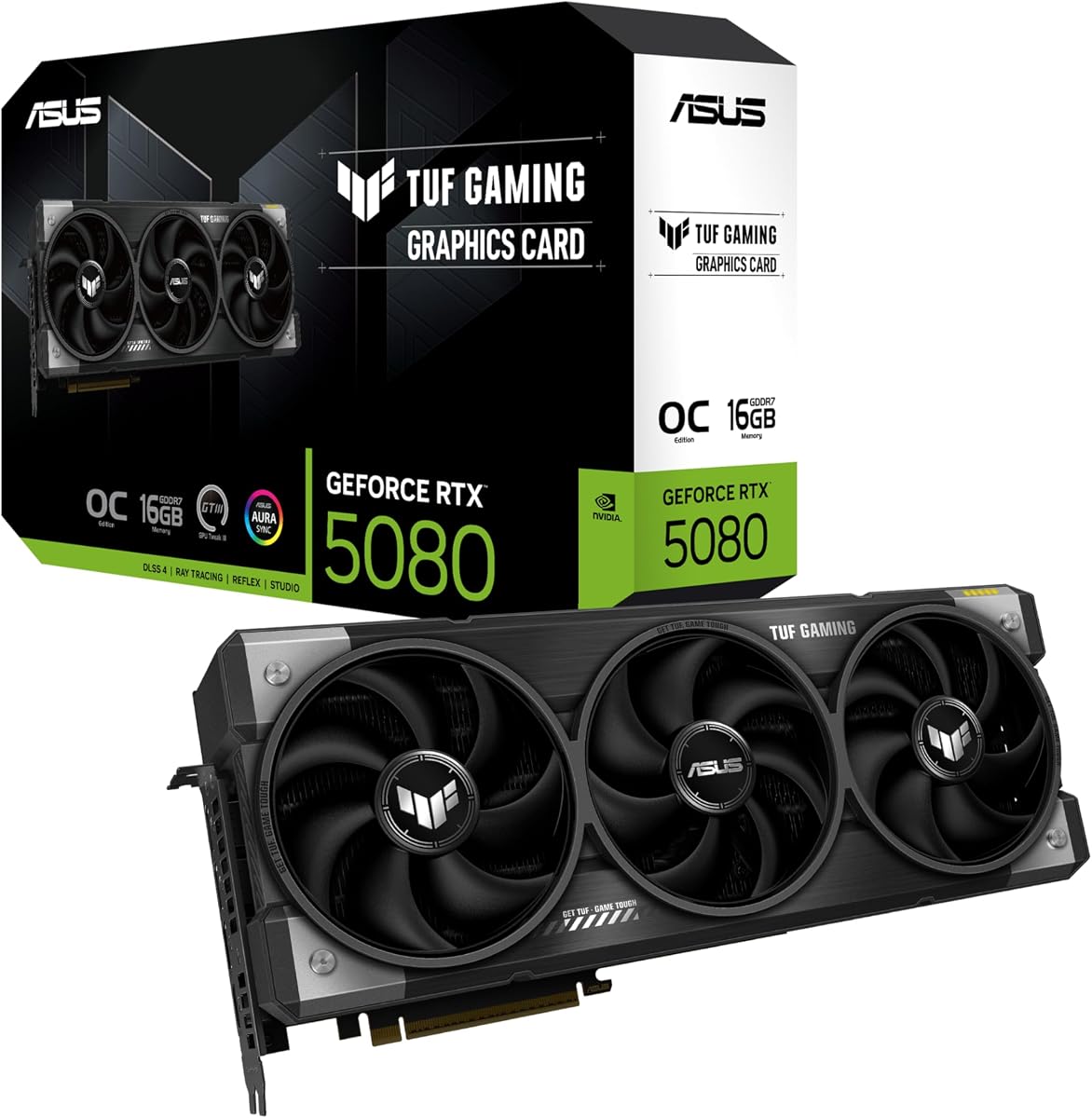
TUF Gaming models are known for rugged construction and consistent performance. This 5080 edition features military-grade components for extended lifespan.
We may earn a commission when you buy through this link, at no additional cost to you.
The massive fin array and phase-change thermal pad ensure stable temperatures during ray tracing workloads. Protective PCB coating guards against environmental damage.
The card is heavy and needs a compatible PSU with the correct connector. Its size may be an issue for compact builds.
Choose this for a long-term investment in reliable performance. Confirm case clearance before installation.
Military-grade parts ensure rock-solid power delivery and longevity.
Included bracket reduces risk of GPU sag during extended use.
We may earn a commission when you buy through this link, at no additional cost to you.
This model brings 16GB GDDR7 memory at an accessible price. Its 4.7 rating reflects strong value for builders on a budget.
We may earn a commission when you buy through this link, at no additional cost to you.
AI Performance of 767 TOPS helps accelerate workloads. Axial-tech fans maximize cooling while the 2.5-slot design fits small cases.
It may not match top-tier frame rates but offers solid entry-level ray tracing. Ideal for 1080p or 1440p gaming.
Recommend for cost-conscious buyers wanting modern features. Check PSU wattage requirements before buying.
High AI TOPS enable faster processing for creative and rendering tasks.
Maximizes compatibility in smaller chassis without sacrificing cooling efficiency.
We may earn a commission when you buy through this link, at no additional cost to you.
Balancing cost and performance, this 5070 TUF edition offers dependable specs. The 4.7 rating indicates user satisfaction with its build and cooling.
We may earn a commission when you buy through this link, at no additional cost to you.
Phase-change thermal pad ensures optimal performance under load. Military-grade components provide durability and Auto-Extreme manufacturing ensures precision.
It may fall short for heavy 4K ray tracing but excels at 1440p. GPU Tweak III software simplifies performance monitoring.
Ideal for users needing a solid mid-tier GPU. Ensure your power supply supports the card.
Auto-Extreme process enhances reliability and reduces defects in the PCB.
GPU Tweak III helps users optimize performance and thermal control easily.
We may earn a commission when you buy through this link, at no additional cost to you.
This entry-level AMD option provides 16GB VRAM for the price. Its 4.7 rating shows strong value for budget builds.
We may earn a commission when you buy through this link, at no additional cost to you.
Axial-tech fans and 2.5-slot design ensure compatibility and airflow. The Dual BIOS switch allows toggling between Quiet and Performance profiles.
Ray tracing performance is limited compared to NVIDIA but sufficient for light use. It is a great card for casual gamers.
Buyers prioritizing VRAM and cost should consider this model. Ensure compatibility with your power supply unit.
16GB GDDR6 provides ample memory for modern textures at a low price.
0dB technology allows silent operation during light gaming sessions.
We may earn a commission when you buy through this link, at no additional cost to you.
The highest rated card in this lineup offers premium specs. Its 4.8 rating reflects excellence in build and performance.
We may earn a commission when you buy through this link, at no additional cost to you.
With military-grade components and phase-change thermal pads, durability is assured. Protective PCB coating helps against dust and moisture.
Though pricey, it delivers excellent value for 1440p and 4K ray tracing. Users value the robust mounting bracket and Auto-Extreme precision.
Choose this for a high-end rig requiring long-term reliability. Confirm PSU requirements before purchase.
Military-grade components ensure rock-solid power and longer lifespan.
Auto-Extreme precision manufacturing ensures higher reliability and performance.
We may earn a commission when you buy through this link, at no additional cost to you.
A strong mid-tier option with 12GB GDDR7 memory. Its 4.8 rating indicates high user satisfaction.
We may earn a commission when you buy through this link, at no additional cost to you.
Blackwell architecture and WINDFORCE cooling provide stable performance. PCIe 5.0 support future-proofs the card for new systems.
The 192-bit interface limits bandwidth but keeps costs down. Ideal for 1080p and 1440p gaming.
Recommend for gamers needing reliable performance without premium costs. Check case space for the card.
New architecture delivers higher efficiency and better ray tracing capabilities.
WINDFORCE system maintains low noise during standard gaming loads.
We may earn a commission when you buy through this link, at no additional cost to you.
A compact card ideal for smaller builds needing strong performance. Its 4.8 rating reflects praise for cooling and design.
We may earn a commission when you buy through this link, at no additional cost to you.
DLSS 3 and Ada Lovelace architecture provide efficient ray tracing. IceStorm 2.0 cooling ensures quiet operation and good thermal performance.
Being PCIe 4.0 limits bandwidth but is sufficient for most gaming. RGB lighting adds aesthetic appeal.
Choose this for compact setups requiring reliable performance. Verify case dimensions and GPU clearance.
IceStorm 2.0 Advanced Cooling ensures efficient heat removal in smaller cases.
DLSS 3 delivers higher frame rates with minimal visual compromise.
We may earn a commission when you buy through this link, at no additional cost to you.
Selecting the right graphics card involves balancing performance, budget, and system requirements. This guide outlines key factors to consider.
Modern architectures like Blackwell and Ada Lovelace offer superior ray tracing efficiency. Look for cards that support the latest API features.
Prioritize cards with efficient architecture to ensure longevity and performance per watt.
Ray tracing workloads consume significant memory. Aim for at least 12GB or 16GB VRAM to avoid bottlenecks in high-resolution textures.
Choose higher VRAM to future-proof your system against upcoming game demands.
Sustained performance requires effective cooling. Consider cards with robust fan arrays and phase-change thermal pads for stability.
Ensure the cooling solution fits your case and maintains low noise levels.
High-performance cards demand adequate PSU wattage and correct connectors. Check if the card needs a 12VHPWR adapter.
Verify your power supply meets the minimum wattage before purchasing.
Not all cards handle ray tracing equally. NVIDIA cards generally offer better ray tracing performance and DLSS support.
Select based on whether you prioritize ray tracing or raw rasterization speed.
Modern GPUs can be large. Measure your case length and slot clearance to ensure fit.
Choose compact models like the ASUS Dual series if you have limited space.
Prices vary significantly across tiers. Determine your budget to find a card that fits your needs without overspending.
Balance cost against performance requirements to maximize value.
PCIe 5.0 and modern interfaces ensure the card works with future CPUs. Check motherboard slots for compatibility.
Invest in PCIe 5.0 for better future-proofing and bandwidth.
Install the GPU carefully by aligning it with the PCIe slot and securing it with screws. Connect the necessary power cables to ensure stable operation.
Keep the system clean by removing dust from fans and vents regularly. Use compressed air to prevent overheating and maintain airflow.
Update drivers and BIOS to ensure compatibility with new games. Use software tools to monitor temperatures and adjust fan curves if needed.
Not all cards support ray tracing equally. Most modern RTX models do but AMD cards have limited support. Check specs for ray tracing features before buying.
At least 8GB VRAM is required but 12GB or more is recommended. Higher VRAM ensures smooth performance in modern titles with heavy textures.
NVIDIA generally offers the best ray tracing performance with DLSS support. AMD provides alternatives but may not match the same fidelity or features.
Older cards may support basic ray tracing but performance suffers. For a good experience, upgrade to newer architectures designed for it.
Ray tracing is demanding and reduces frame rates. Enable DLSS or adjust settings to maintain smooth gameplay while using it.
Ray tracing cards often require 850W or more. Always check the specific card requirements to avoid power issues during gaming.
Use software like GPU Tweak or third-party tools to track temps. Ensure cooling fans are clean and functioning to prevent overheating.
If you prioritize visuals and have a compatible display, upgrading is worth it. It enhances immersion significantly in modern titles and VR.
We reviewed ten top graphics cards that excel in ray tracing performance. Our picks include options for every budget from premium to budget-friendly.
Prioritize VRAM capacity, cooling quality, and architecture when making your choice. Ensure your system meets power and case requirements for the selected model.
Prices and availability fluctuate so verify current details before purchasing. This guide remains updated to reflect the latest products available this year.