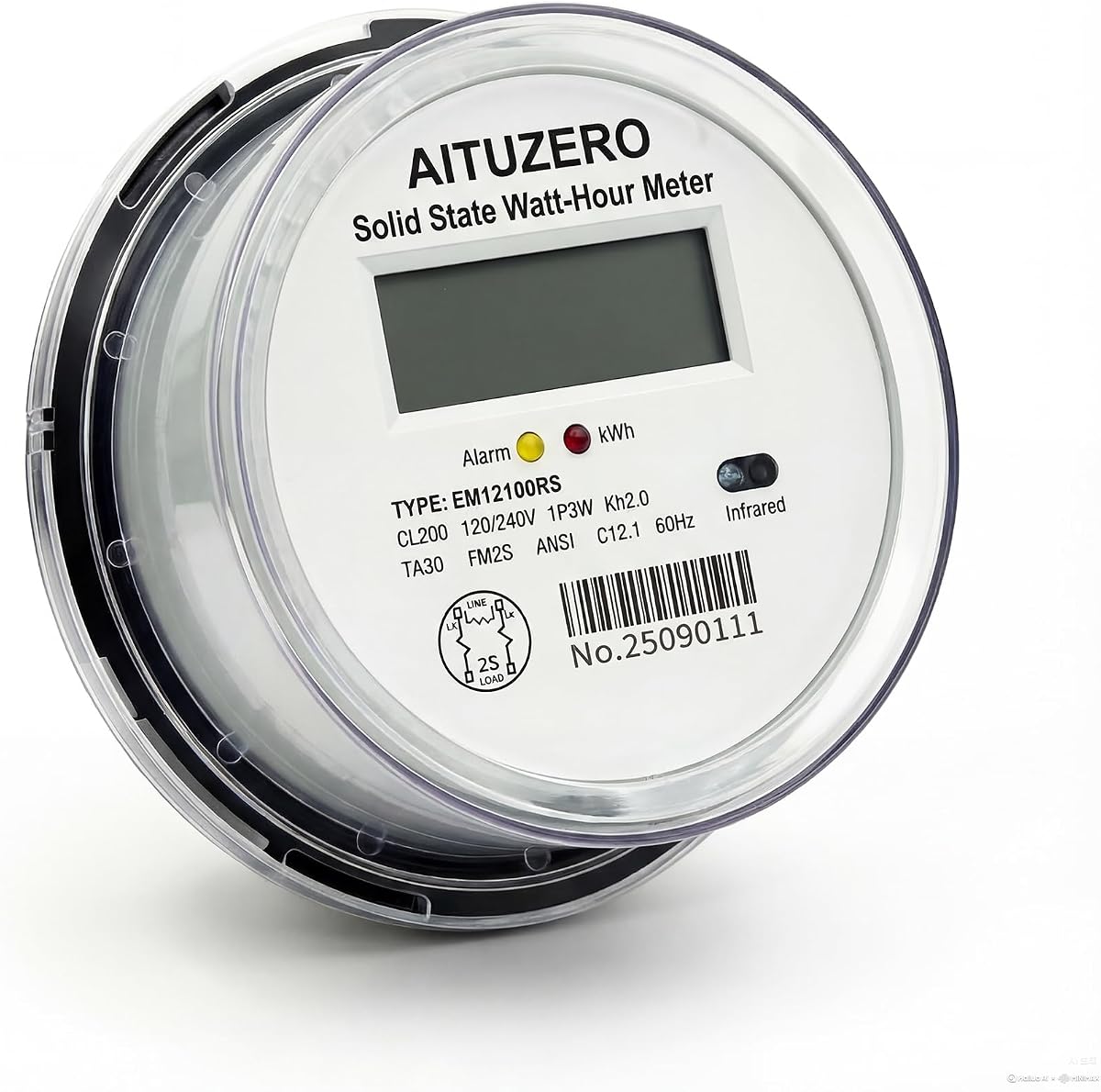
Digital Electric Sub Meters for Landlords
4.5Editor score
ANSI Form 2S socket fit
120/240V single phase
Bright LCD with backlight
This guide compares the top electric sub meters for landlords and solar users, covering accuracy, installation, and communication features for fair billing.
Finding the right electric sub meter is essential for landlords, solar owners, and facility managers who need accurate usage tracking. These devices measure energy consumption separately from the main meter, allowing fair billing and better energy management across multiple tenants or circuits. A good sub meter provides reliable data, easy installation, and clear readings to help you monitor power usage effectively.
We have carefully evaluated ten top-rated electric sub meters based on their accuracy, compatibility, and feature sets. Our comparison looks at voltage ranges, communication protocols like Modbus, and ease of installation for both residential and light industrial applications. Each product was chosen for its ability to deliver consistent kWh readings and support diverse power monitoring needs.
Each pick in this list shows a unique solution for sub-metering, from budget-friendly single-phase units to advanced multi-phase systems with cloud connectivity. You will see detailed pros, cons, and specifications to help you decide which meter fits your specific electrical setup. Please note that prices and availability can change, so verify current details before purchasing.
4.5Editor score

4.8Editor score
4.5Editor score
The following table provides a side-by-side comparison of all ten electric sub meters reviewed in this guide. It highlights key specifications such as voltage range, amperage capacity, and communication options to help you quickly identify the right model for your electrical system.


This digital electric sub meter ranks first for its exceptional value and ease of use. With a 4.5-star rating, it is designed for landlords and DIY users who need reliable tracking without complex setups. Its ANSI Form 2S fit allows quick installation in standard meter bases.
We may earn a commission when you buy through this link, at no additional cost to you.
The meter offers precise kWh tracking for tenants or RV parks, with clear LCD visibility of voltage and current. It supports solar import/export monitoring and includes Modbus communication for system integration. The solid-state design ensures durability against electrical fluctuations.
While it lacks built-in cloud connectivity, the Modbus and pulse outputs allow integration with external loggers. The single-phase limitation means it suits 120/240V systems only. For budget-conscious users needing accuracy, these trade-offs are acceptable.
Ideal for landlords managing rental units or workshop owners tracking power, this meter delivers dependable data. Its labeled terminals and bright display make it a top choice for straightforward sub-metering applications.
The affordable price point and simple installation make this an ideal entry-level solution for property managers seeking fair billing.
Reverse-flow LED and import/export tracking help solar users monitor panel performance and grid interaction accurately.
We may earn a commission when you buy through this link, at no additional cost to you.
Rated 4.8 stars, this meter stands out for its advanced communication and detailed display. It is an editor's choice for professionals needing real-time data via RS485 Modbus. The import/export tracking makes it perfect for solar setups.
We may earn a commission when you buy through this link, at no additional cost to you.
The large backlit LCD cycles through voltage, current, power factor, and more, providing deep insights. Non-volatile memory retains data during outages, and the IR port allows configuration without opening the panel. Labeled terminals simplify wiring.
Setup requires understanding Modbus networks, which may challenge beginners. The price is higher than basic models but justified by the advanced features. For those needing integration, this is a reliable investment.
Recommended for landlords with multiple units or solar enthusiasts, this meter balances accuracy and connectivity. Its robust feature set ensures long-term value for energy management.
RS485 Modbus RTU support enables connection to centralized monitoring systems for multi-meter management.
The LCD shows active, reactive, and apparent power alongside power factor for complete system visibility.
We may earn a commission when you buy through this link, at no additional cost to you.
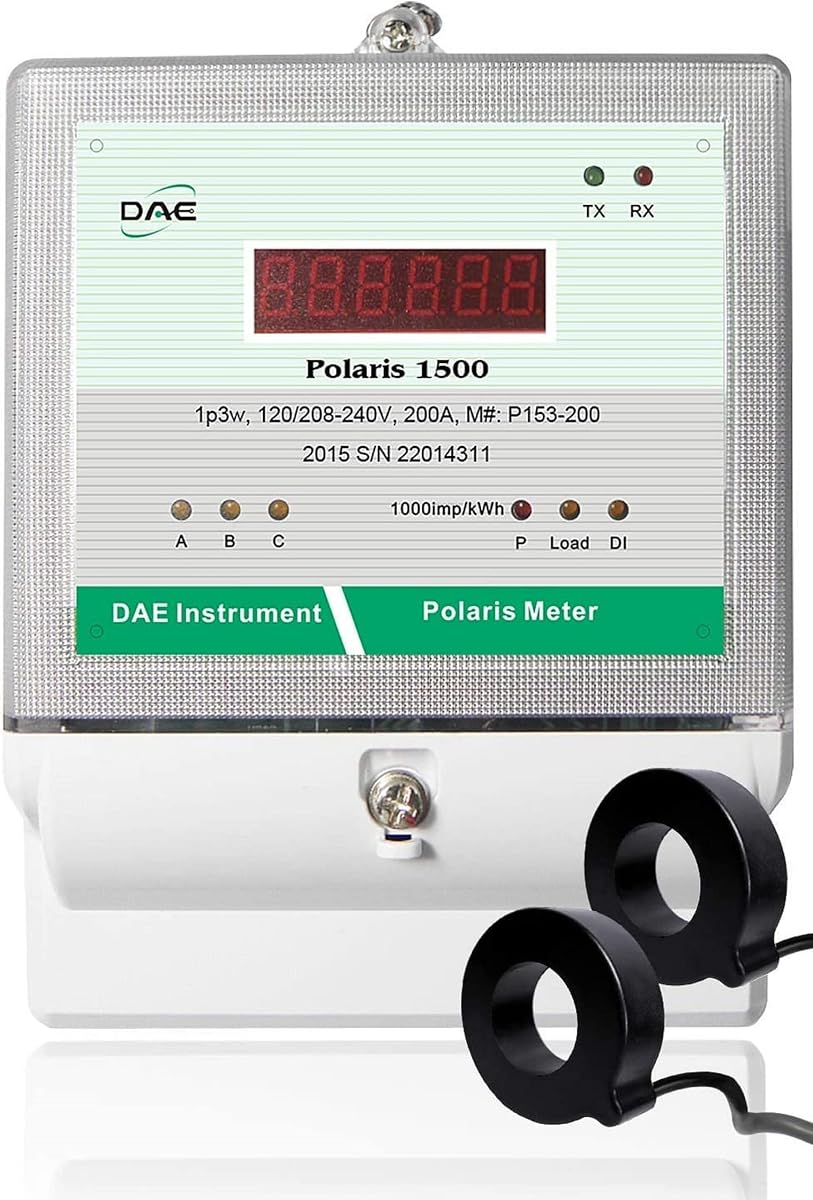
This premium kit offers revenue-grade accuracy and CTEP approval, ideal for commercial billing. With a 4.5-star rating, it supports cloud metering via the CC2030 Gateway. The 200A capacity handles heavy loads in rental properties or industrial sites.
We may earn a commission when you buy through this link, at no additional cost to you.
It conforms to ANSI C12.1 and C12.20 standards, ensuring high precision. The RS485 port connects to monitoring systems, and cloud reports support time-of-use billing. Split core CTs allow flexible installation.
The high cost may be prohibitive for small residential users. Without the watertight enclosure, outdoor use is limited. However, for professional applications, the accuracy and features are unmatched.
Property managers needing compliant billing data should consider this meter. Its robust design and cloud integration make it a top-tier choice for serious energy monitoring.
The 0.5% accuracy and CTEP approval ensure billing data meets industry standards.
Access real-time data and monthly kWh reports via PC or phone with the cloud gateway.
We may earn a commission when you buy through this link, at no additional cost to you.
This meter is built for durability, featuring a robust enclosure rated for outdoor installations. With 200 Amp capacity, it suits commercial or light industrial settings. Its 120/208/240V compatibility offers broad voltage support.
We may earn a commission when you buy through this link, at no additional cost to you.
The compact design saves space in panels, and flexible configurations (1PH, 2W, 3W) adapt to various systems. Clear labeling aids installation. However, it lacks advanced communication features like Modbus.
The 3.2 rating suggests some users faced issues or found features limited. It is less detailed than digital competitors. For simple, rugged needs without networking, it serves adequately.
Choose this if you prioritize durability over advanced data tracking. It works well for basic sub-metering where simple kWh readings are sufficient.
The robust enclosure withstands outdoor conditions, making it suitable for exterior meter boxes.
We may earn a commission when you buy through this link, at no additional cost to you.
With a 4.4-star rating, this meter simplifies installation with internal current transformers. It connects to cloud gateways for remote monitoring via RS485. Conforming to IEC standards, it ensures reliability for small panels.
We may earn a commission when you buy through this link, at no additional cost to you.
The 50A limit suits lower-load circuits like workshops or light commercial units. Indoor use only requires a separate enclosure for outdoor placement. Setup is straightforward with provided wiring diagrams.
While limited to 50A and indoor use, it is effective for small-scale sub-metering. The cloud support adds value for property managers needing remote data access.
Consider this for smaller applications where internal CTs reduce wiring complexity. It is a solid choice for indoor monitoring.
Internal current transformers eliminate the need for external CTs, reducing wiring time.
We may earn a commission when you buy through this link, at no additional cost to you.
Designed for three-phase systems, this meter handles up to 480V and 200A. With UL CTEP approval, it is suitable for commercial billing. The RS485 port and cloud options enable advanced monitoring.
We may earn a commission when you buy through this link, at no additional cost to you.
It works for both 3-wire and 4-wire setups, offering flexibility for industrial panels. The accuracy matches the P153 series but in three-phase. Indoor use requires enclosure for outdoors.
The cost and complexity are higher than single-phase units. However, for facilities needing three-phase metering, it delivers certified accuracy.
Ideal for industrial or multi-phase commercial sites, this meter ensures compliance and detailed tracking.
Supports both 3-wire and 4-wire configurations for versatile three-phase panel metering.
We may earn a commission when you buy through this link, at no additional cost to you.
This pass-through meter is built for simplicity, with direct wiring for 120/240V systems. Rated up to 100A, it fits panels needing straightforward tracking. The pulse output allows remote data logging.
We may earn a commission when you buy through this link, at no additional cost to you.
It adapts to 2-wire or 3-wire configurations, offering flexibility. The LCD displays readings locally, but lacks advanced communication. It is a solid choice for basic needs.
The lack of Modbus or cloud features limits advanced users. However, for passive tracking without setup complexity, it performs well.
Recommended for simple residential or workshop sub-metering where easy installation is priority.
Supports both 2-wire and 3-wire single-phase systems for broad compatibility.
We may earn a commission when you buy through this link, at no additional cost to you.
Rated 5.0 stars, this meter excels with internal CTs and Din Rail mounting. It tracks whole panel usage for 120V and 240V circuits. Cloud integration options make it easy for landlords to monitor remotely.
We may earn a commission when you buy through this link, at no additional cost to you.
It monitors hot wires without connecting neutral, simplifying wiring. The cloud gateway support provides detailed reports without IT expertise. Conforming to IEC standards, it ensures reliability.
Indoor use requires separate enclosure for outdoor. Neutral is not measured, which is standard for this design. Overall, it balances ease and functionality perfectly.
Top choice for modern indoor sub-metering where Din Rail and cloud data are needed.
Standard Din Rail mounting makes panel integration quick and secure for installers.
We may earn a commission when you buy through this link, at no additional cost to you.
This universal meter fits 2-wire or 3-wire setups, offering broad compatibility. Rated for 100A, it handles most residential loads. The pulse output allows connection to external monitors.
We may earn a commission when you buy through this link, at no additional cost to you.
It lacks advanced communication, focusing on reliable basic tracking. The LCD provides local readings, sufficient for simple sub-metering. Durable construction ensures long-term use.
Advanced users may miss Modbus support. However, for straightforward kWh tracking, it is dependable and versatile.
Choose this for generic single-phase needs where wiring flexibility is key.
Adapts to various single-phase wiring configurations without special adapters.
We may earn a commission when you buy through this link, at no additional cost to you.
With a Class 1000 rating, this meter supports 1 or 2-phase systems. It is suited for higher-end commercial applications. The brand is established, and 100A capacity handles robust loads.
We may earn a commission when you buy through this link, at no additional cost to you.
It fits 120/208-240V, offering flexibility. However, detailed features are less described compared to others. It is a solid option for specific industrial needs.
Limited public data on communication features. Price is high, but quality is expected from the brand.
Consider for specialized commercial needs where brand reliability is paramount.
Class 1000 design ensures stability in heavier commercial electrical environments.
We may earn a commission when you buy through this link, at no additional cost to you.
Selecting the right electric sub meter depends on your specific voltage, load, and monitoring needs. This guide outlines key factors to help you match a model to your system.
Ensure the meter supports your system voltage, such as 120/240V or 480V, and matches single or three-phase requirements. Mismatched voltage can lead to inaccuracies or damage.
Always verify the input range and phase configuration before purchase.
Check the maximum current rating (e.g., 50A, 100A, or 200A) to ensure it handles your load. Under-rated meters may fail under high demand.
Select a capacity slightly above your expected maximum usage.
Look for revenue-grade accuracy (like 0.5%) and certifications such as ANSI CTEP for commercial billing. Accuracy ensures fair billing and reliable energy tracking.
Certified meters provide trust for tenant invoicing.
Decide if you need local readings only or remote access via Modbus, RS485, or cloud gateways. Advanced features support centralized management.
Choose communication options based on your monitoring complexity.
Consider whether the meter uses socket bases, DIN rail, or pass-through wiring. Internal CTs simplify wiring, while external CTs offer flexibility.
Match the installation method to your panel and skill level.
If installing outdoors, ensure the meter or enclosure is weather-rated. Indoor-only models require protection against moisture and temperature.
Use appropriate enclosures for durability in harsh conditions.
Bright backlit LCDs make it easy to check readings in dim spaces. Ensure it shows key data like kWh, voltage, and current.
Clear displays reduce monitoring effort.
Balance initial cost with long-term value. Premium models with cloud features cost more but offer better tracking for multiple units.
Set a budget that aligns with your tracking needs.
Install the meter according to manufacturer instructions, ensuring correct wiring for line, load, and neutral. Use labeled terminals to avoid confusion.
Power on and check the LCD for initial readings. Verify that the pulse or Modbus outputs are active if using remote monitoring.
Regularly clean the display and inspect the enclosure for damage. For outdoor models, ensure seals remain intact to protect circuitry.
An electric sub meter measures energy consumption for a specific circuit or tenant separately from the main utility meter. It helps landlords charge accurate bills based on actual usage.
Not all sub meters need internet. Basic models show readings on an LCD. Advanced ones with cloud gateways require Ethernet or wireless connections for remote access.
Yes, many sub meters support import/export tracking to monitor solar energy flow. Look for bidirectional features or reverse LED indicators.
ANSI Form 2S refers to a standard meter socket configuration with four jaws. It ensures compatibility with many residential meter bases.
Connect Modbus via RS485 terminals to a gateway or logger. Configure the address and parameters using the meter's interface or software.
Internal CTs simplify wiring but limit capacity. External CTs offer flexibility and higher capacity but require additional installation steps.
Only models with weather-rated enclosures should be used outdoors. Indoor units need protective boxes to prevent moisture damage.
Most residential sub meters are accurate within 1% or better. Revenue-grade models meet 0.5% accuracy for billing compliance.
We reviewed ten top electric sub meters suitable for landlords, solar owners, and facility managers. The Digital Electric Sub Meters for Landlords offers the best budget value, while the Digital Electric Sub Meter CL200 leads in features.
Consider your voltage, load, and need for remote data when choosing. Cloud-ready models simplify management, while simple meters suit basic billing needs.
Prices and availability change frequently. Always verify specifications and current offers on the product page before ordering.